


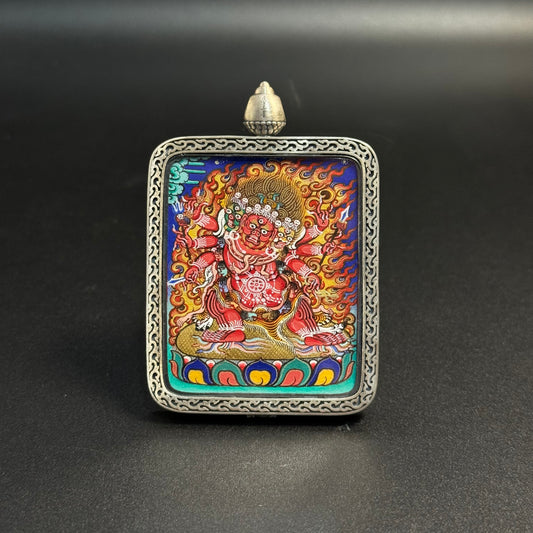
Hayagriva (Horse-Headed Wisdom King) Mini Thangka Pendant Hand-Painted • Mineral Pigments • Rebgong Origin • 4 × 5 cm
Regular price
$8,000.00 USD
This Hayagriva Mini Thangka Pendant is a traditional Himalayan devotional artwork created in the Rebgong (Regong) thangka painting tradition of Amdo Qinghai. The sacred image is fully hand-painted by traditional Tibetan thangka artists using natural mineral pigments, a classical method valued for its color depth and long-term durability.
The miniature thangka painting is mounted inside a 925 sterling silver pendant case featuring a Nine-Colored Deer relief, combining traditional Tibetan metalwork with sacred painting. The painting size measures 4 × 5 cm, preserving the expressive power of traditional thangka art in a compact format suitable for personal devotion, travel altars, or sacred art collections. Each piece is delivered with a certificate and protective gift box, reflecting its collectible and cultural value.
Hayagriva, also known as the Horse-Headed Wisdom King, is a powerful wrathful manifestation associated with the Lotus Family of Amitabha Buddha and is closely connected with Avalokiteshvara (Chenrezig) in Tibetan Buddhist tradition.
In Tibetan Vajrayana practice, Hayagriva is revered as a wrathful compassionate protector who transforms negative forces and removes obstacles affecting practitioners. His distinctive iconography includes one or multiple horse heads emerging from the crown, symbolizing the power to overcome ignorance and destructive influences.
Hayagriva is traditionally associated with the removal of fear, illness, and obstructive influences, especially those believed to arise from harmful energies or disturbances that may affect spiritual practice.
Within Tibetan Vajrayana symbolism, wrathful deities such as Hayagriva represent compassion expressed in powerful protective form. The horse-head iconography symbolizes the forceful awakening of wisdom that dispels ignorance and clears obstacles along the path of practice.
Devotees often keep the image of Hayagriva as a reminder of courage, spiritual protection, and disciplined practice, encouraging the cultivation of clarity and strength when confronting internal and external challenges.
Not applicable — this pendant features a single deity image.
This miniature thangka originates from the Rebgong (Regong) thangka painting tradition in Amdo Qinghai, one of the most respected centers of Tibetan sacred painting.
Rebgong artists are known for their precise line discipline, balanced composition, and vibrant mineral pigment layering. Unlike factory-produced images, traditional thangka paintings are carefully created by trained artists following classical iconographic proportions and artistic lineage transmitted through generations.
The sacred image is fully hand-painted using natural mineral pigments, a traditional Himalayan technique known for its strong color stability and longevity. Mineral pigments are valued for maintaining vibrant coloration that can endure for generations.
The painting is protected within a 925 sterling silver pendant case featuring a Nine-Colored Deer relief, a traditional auspicious motif in Tibetan art. The combination of hand-painted thangka art and crafted silver housing transforms the piece into both a devotional object and a collectible artwork.
Each pendant is delivered with a certificate of authenticity and a presentation gift box, suitable for collectors and cultural enthusiasts.
Painting Size: 4 × 5 cm
Format: Mini Thangka Pendant
Origin: Rebgong (Amdo Qinghai)
Housing: 925 Sterling Silver Case with Nine-Colored Deer Relief
Packaging: Certificate and Gift Box Included
This miniature thangka pendant may be suitable for:
Buddhist practitioners who maintain protective deity imagery during practice
Collectors of Himalayan sacred art and thangka painting
Individuals who appreciate portable devotional objects for meditation or travel altars
Devotees interested in traditional Tibetan Vajrayana protective symbolism
This item represents a traditional form of Tibetan Buddhist sacred art and craftsmanship. Deities such as Hayagriva are culturally associated with protection, removal of obstacles, and the transformation of negative influences within Vajrayana symbolism.
These meanings arise from religious and cultural traditions rather than guaranteed outcomes. The pendant is intended to support spiritual reflection, cultural appreciation, and the preservation of Himalayan artistic heritage.
For all orders exceeding a value of 100USD shipping is offered for free.
Returns will be accepted for up to 10 days of Customer’s receipt or tracking number on unworn items. You, as a Customer, are obliged to inform us via email before you return the item.
Otherwise, standard shipping charges apply. Check out our delivery Terms & Conditions for more details.
Returns will be accepted for up to 10 days of Customer’s receipt or tracking number on unworn items. You, as a Customer, are obliged to inform us via email before you return the item, only in the case of:
– Received the wrong item.
– Item arrived not as expected (ie. damaged packaging).
– Item had defects.
– Over delivery time.
– The shipper does not allow the goods to be inspected before payment.
The returned product(s) must be in the original packaging, safety wrapped, undamaged and unworn. This means that the item(s) must be safely packed in a carton box for protection during transport, possibly the same carton used to ship to you as a customer.
Here’s some of our most similar products people are buying. Click to discover trending style.