


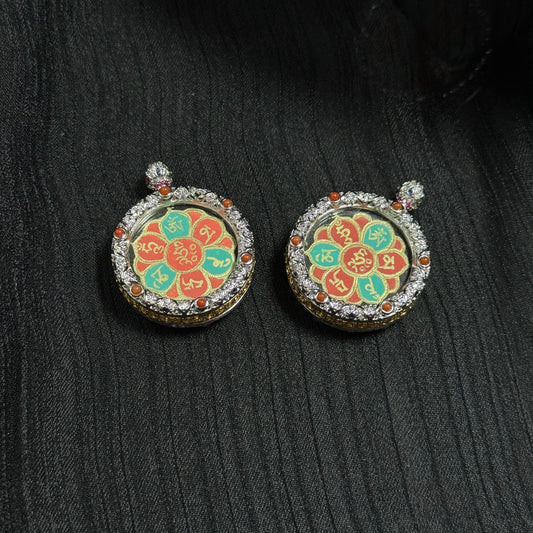
Avalokiteshvara Mani Mantra Mini Thangka Pendant Hand-Painted • Gold Powder Calligraphy • Mineral Pigments • Rebgong Tradition • 2.5 cm
Regular price
$450.00 USD

This Avalokiteshvara Mani Mantra Mini Thangka Pendant is a finely crafted miniature sacred artwork created in the Rebgong thangka painting tradition of Tibet. The pendant presents the sacred Six-Syllable Mantra of Avalokiteshvara — “Om Mani Padme Hum” — together with the seed syllable “She”, hand-written in pure gold powder calligraphy upon a lotus painted with natural mineral pigments.
Created as a portable devotional thangka, this piece combines traditional Tibetan Buddhist iconography, mineral pigment painting, and gold calligraphy within a jewelry copper protective case. The design reflects the contemplative tradition of mantra visualization widely practiced in Tibetan Buddhism.
Avalokiteshvara is one of the most revered bodhisattvas in Mahayana and Vajrayana Buddhism and is widely recognized as the embodiment of universal compassion. In Tibetan Buddhism he is known as Chenrezig, the compassionate protector who hears the suffering of sentient beings.
Avalokiteshvara is traditionally associated with compassion, mercy, and the awakening of altruistic intention, symbolizing the aspiration to relieve suffering and cultivate kindness toward all beings.
The Six-Syllable Mantra “Om Mani Padme Hum” is traditionally associated with the cultivation of compassion and the purification of obscurations in Buddhist practice. Within Tibetan spiritual culture, the mantra is widely recited as a reminder to develop kindness, patience, and altruistic motivation.
Mantra visualization and recitation are regarded as supportive contemplative practices that help practitioners cultivate a compassionate mind and strengthen positive intention. Such practices are traditionally associated with spiritual merit, inner stability, and the aspiration to benefit others, when approached with sincere motivation and consistent practice.
Not applicable.
This pendant presents a single mantra composition dedicated to Avalokiteshvara.
This miniature thangka follows the Rebgong (Regong) painting tradition, a historically recognized Tibetan Buddhist art lineage originating in Amdo, Tibet. Rebgong thangkas are known for their precise composition, refined lines, and devotional iconography developed within monastic artistic communities.
Each piece is individually hand-painted by trained artists, preserving traditional thangka proportions and sacred design principles. The artwork is created as a devotional object rooted in Tibetan Buddhist visual culture rather than factory production.
Natural mineral pigments applied on a lotus composition
Pure gold powder calligraphy used to write the sacred mantra
Traditional miniature thangka painting technique
Jewelry copper protective case designed for portable devotional use
The layered mineral pigments and gold writing reflect techniques traditionally used in Tibetan sacred painting.
Painting size: 2.5 cm
Format: Mini Thangka Pendant
Protective case: Jewelry copper case
The compact format allows the thangka to be worn or carried as a small devotional object.
This miniature thangka pendant may be suitable for:
Buddhist practitioners who keep mantra imagery as part of their practice
Collectors of Tibetan thangka art and sacred calligraphy
Personal meditation spaces or small travel altars
Individuals interested in traditional Himalayan devotional art
This thangka pendant is presented as a traditional cultural and religious artwork rooted in Tibetan Buddhist practice. In Buddhist tradition, sacred imagery and mantras are used to support contemplation and the cultivation of positive intention.
This product is not presented as guaranteeing specific outcomes. Its value lies in its artistic craftsmanship, cultural heritage, and symbolic meaning within spiritual practice.
For all orders exceeding a value of 100USD shipping is offered for free.
Returns will be accepted for up to 10 days of Customer’s receipt or tracking number on unworn items. You, as a Customer, are obliged to inform us via email before you return the item.
Otherwise, standard shipping charges apply. Check out our delivery Terms & Conditions for more details.
Returns will be accepted for up to 10 days of Customer’s receipt or tracking number on unworn items. You, as a Customer, are obliged to inform us via email before you return the item, only in the case of:
– Received the wrong item.
– Item arrived not as expected (ie. damaged packaging).
– Item had defects.
– Over delivery time.
– The shipper does not allow the goods to be inspected before payment.
The returned product(s) must be in the original packaging, safety wrapped, undamaged and unworn. This means that the item(s) must be safely packed in a carton box for protection during transport, possibly the same carton used to ship to you as a customer.
Here’s some of our most similar products people are buying. Click to discover trending style.