


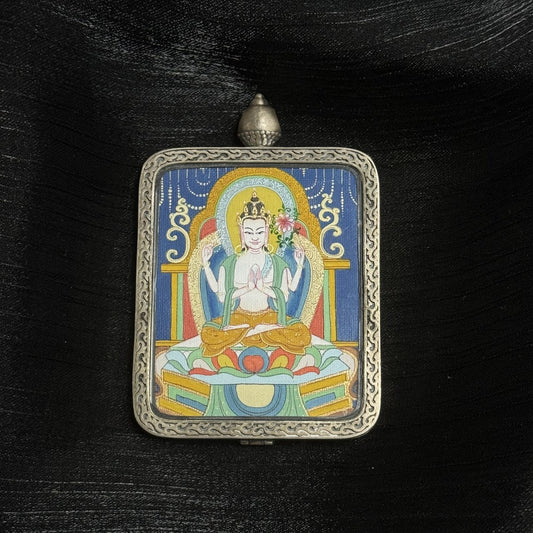
Four-Armed Avalokiteshvara (Chenrezig) Mini Thangka Pendant Hand-Painted • Mineral Pigments • Tibetan Origin • Silver Gawu Case • 4 × 5 cm
Regular price
$8,500.00 USD

This Four-Armed Avalokiteshvara (Chenrezig) Mini Thangka Pendant is a finely crafted Tibetan sacred artwork created in the Qigang thangka painting tradition. The miniature thangka is fully hand-painted using natural mineral pigments and protected within a Dunhuang Nine-Color Deer silver gawu case, combining traditional Himalayan thangka painting with wearable devotional craftsmanship.
Originating from Tibet, this piece reflects the classical Tibetan thangka lineage where sacred images are created according to traditional iconographic proportions and spiritual symbolism. The pendant presents the compassionate image of Four-Armed Avalokiteshvara, one of the most revered bodhisattvas in Tibetan Buddhism and the embodiment of universal compassion.
Avalokiteshvara, known in Tibetan as Chenrezig, is the Bodhisattva of Compassion in Mahayana and Vajrayana Buddhism. The four-armed form is one of the most widely venerated representations, symbolizing the boundless compassion that reaches all sentient beings.
In traditional iconography, the upper hands hold a crystal mala and a lotus flower, representing compassionate action and purity, while the central hands are joined in prayer at the heart, symbolizing the unity of wisdom and compassion. Avalokiteshvara is regarded as the spiritual embodiment of compassion, mercy, and protection.
In Buddhist symbolism, Avalokiteshvara is traditionally associated with compassion, protection, and the alleviation of suffering. Devotion to Avalokiteshvara imagery reflects the cultivation of empathy, kindness, and compassionate awareness toward all beings.
In cultural traditions, the Four-Armed Avalokiteshvara is also associated with the Chinese zodiac Rat, symbolizing guidance, protection, and the ability to overcome difficulties with wisdom and compassion. These associations emphasize the development of patience, resilience, and harmonious relationships in life.
Not applicable.
This pendant features a single deity depiction of Four-Armed Avalokiteshvara.
This miniature thangka follows the Tibetan Qigang painting lineage, a regional style of Tibetan sacred art known for its balanced compositions, refined iconography, and devotional symbolism.
Artists working within this tradition follow established sacred measurement systems and iconographic rules, ensuring the posture, ornaments, and symbolic attributes of the deity remain faithful to classical Tibetan thangka canons. Each piece is individually hand-painted, reflecting traditional craftsmanship rather than factory reproduction.
This pendant combines sacred painting with refined jewelry craftsmanship:
Hand-painted miniature thangka
Natural mineral pigments
Dunhuang Nine-Color Deer silver gawu case
Himalayan portable devotional pendant format
Mineral pigments create strong color stability and layered texture, preserving the authenticity of traditional Himalayan thangka painting techniques.
Painting Size: 4 × 5 cm
Format: Mini Thangka Pendant
Origin: Tibet
Pendant Case: Dunhuang Nine-Color Deer silver gawu frame
The pendant format allows the sacred image to be worn or carried, making it suitable for both personal devotion and artistic collection.
This miniature thangka pendant may be suitable for:
Buddhist practitioners
Collectors of Tibetan thangka art
Individuals drawn to Avalokiteshvara symbolism of compassion and protection
Those seeking a portable sacred image for meditation, travel, or personal shrine use
This item is a traditional Tibetan religious artwork rooted in Himalayan Buddhist culture. Sacred images are historically used as visual supports for contemplation, devotion, and spiritual reflection.
The symbolic meanings associated with Avalokiteshvara reflect traditional Buddhist teachings and cultural beliefs. This pendant is offered as religious art and cultural heritage, and it does not guarantee specific outcomes or results.
For all orders exceeding a value of 100USD shipping is offered for free.
Returns will be accepted for up to 10 days of Customer’s receipt or tracking number on unworn items. You, as a Customer, are obliged to inform us via email before you return the item.
Otherwise, standard shipping charges apply. Check out our delivery Terms & Conditions for more details.
Returns will be accepted for up to 10 days of Customer’s receipt or tracking number on unworn items. You, as a Customer, are obliged to inform us via email before you return the item, only in the case of:
– Received the wrong item.
– Item arrived not as expected (ie. damaged packaging).
– Item had defects.
– Over delivery time.
– The shipper does not allow the goods to be inspected before payment.
The returned product(s) must be in the original packaging, safety wrapped, undamaged and unworn. This means that the item(s) must be safely packed in a carton box for protection during transport, possibly the same carton used to ship to you as a customer.
Here’s some of our most similar products people are buying. Click to discover trending style.