


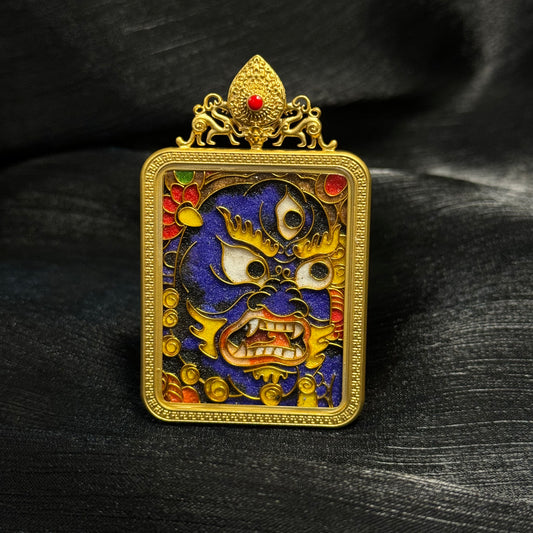
Black Jambhala (Black Dzambhala) Mini Thangka Pendant Handcrafted Cloisonné Enamel • 24K Gold-Plated Copper Case • Tibetan Buddhist Wealth Deity • 4 × 5 cm
Regular price
$320.00 USD

This Black Jambhala (Black Dzambhala) Mini Thangka Pendant is a handcrafted devotional pendant created using traditional cloisonné enamel craftsmanship and set within a 24K gold-plated copper protective case. The pendant presents the revered Buddhist wealth deity in a compact mini thangka format, designed for portable devotional use and artistic appreciation.
Carefully crafted by artisans, the piece combines Buddhist sacred symbolism with intricate enamel artistry. The structured metal frame and vivid enamel colors reflect a refined approach to Himalayan-inspired Buddhist decorative art while preserving the symbolic identity of the deity.
Black Jambhala, also known as Black Dzambhala, is one of the Five Jambhala wealth deities in Tibetan Buddhism. Among them, Black Jambhala is regarded as a powerful protector associated with removing poverty and supporting the accumulation of merit and prosperity.
He symbolizes the transformation of material hardship and the protection of virtuous activity. In Buddhist tradition, wealth deities like Jambhala are understood not merely as symbols of material gain, but as guardians who support practitioners in cultivating generosity, ethical conduct, and beneficial actions.
Within Buddhist traditions, Black Jambhala is traditionally associated with prosperity, protection from obstacles, and the cultivation of generosity. His symbolism emphasizes that true prosperity arises from the accumulation of merit, compassion, and virtuous actions.
The imagery of Black Jambhala also represents protection from harmful influences and negative obstacles that may interfere with one’s livelihood or positive activities. Practitioners traditionally approach wealth deity practices with the intention of benefiting others, practicing generosity, and creating positive causes for prosperity and stability.
Not applicable.
This pendant presents a single sacred figure.
The design reflects the Himalayan Buddhist artistic tradition, where wealth deities such as Jambhala are frequently depicted in thangka paintings and ritual imagery. Although presented here in miniature pendant form, the symbolic representation follows the established iconographic language used in Buddhist devotional art.
Rather than mass-produced decorative jewelry, the piece emphasizes handcrafted devotional artistry, translating traditional sacred imagery into a portable format suitable for personal spiritual objects and cultural collections.
This pendant is produced using traditional cloisonné enamel techniques, where delicate metal wires form the outlines of the sacred design and are filled with colored enamel before being finished into a durable decorative surface.
Craftsmanship details include:
Copper protective case
24K gold electroplating
Handcrafted cloisonné enamel artwork
Solid metal structure designed for durability and long-term preservation
The gold plating is designed to maintain its appearance with normal use.
Painting Size: 4 × 5 cm
Format: Mini Thangka Pendant
Case Material: Copper with 24K gold plating
Craft Technique: Handcrafted cloisonné enamel
Its compact dimensions allow it to function as a portable sacred image suitable for personal devotional practice.
This miniature thangka pendant may be suitable for:
Buddhist practitioners who keep sacred images for devotional practice
Collectors of Himalayan Buddhist art
Individuals who maintain a personal shrine or travel altar
Those interested in symbolic representations of prosperity, protection, and spiritual generosity
It can be worn, carried during travel, or placed in a meditation or altar space.
This pendant is presented as a religious and cultural artwork inspired by Tibetan Buddhist traditions. While Black Jambhala holds deep symbolic significance within Buddhist teachings related to prosperity and generosity, the item itself should be understood as a devotional and artistic object rather than a guarantee of specific results.
Its value lies in supporting cultural appreciation, artistic craftsmanship, and personal reflection on generosity and positive intention.
For all orders exceeding a value of 100USD shipping is offered for free.
Returns will be accepted for up to 10 days of Customer’s receipt or tracking number on unworn items. You, as a Customer, are obliged to inform us via email before you return the item.
Otherwise, standard shipping charges apply. Check out our delivery Terms & Conditions for more details.
Returns will be accepted for up to 10 days of Customer’s receipt or tracking number on unworn items. You, as a Customer, are obliged to inform us via email before you return the item, only in the case of:
– Received the wrong item.
– Item arrived not as expected (ie. damaged packaging).
– Item had defects.
– Over delivery time.
– The shipper does not allow the goods to be inspected before payment.
The returned product(s) must be in the original packaging, safety wrapped, undamaged and unworn. This means that the item(s) must be safely packed in a carton box for protection during transport, possibly the same carton used to ship to you as a customer.
Here’s some of our most similar products people are buying. Click to discover trending style.