


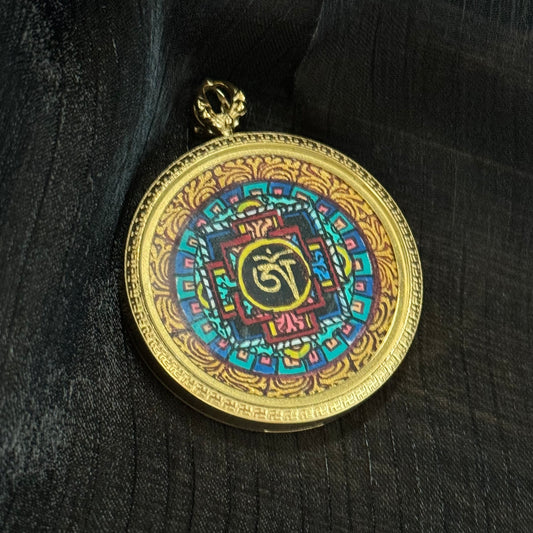
Mandala Mini Thangka Pendant Hand-Painted • Nepal Origin • Mineral Pigments • 3.5 cm
Regular price
$175.00 USD

This Mandala Mini Thangka Pendant is a sacred miniature artwork created in the Nepalese thangka painting tradition. The pendant features a hand-painted mandala composition, executed with traditional mineral pigments and adapted into a compact mini thangka pendant format suitable for personal carrying.
Mandala imagery holds an important role in Tibetan and Himalayan Buddhist visual culture. Crafted by artists in Nepal, the painting follows classical mandala structure representing the cosmic diagram of enlightened space, rendered in symbolic colors that reflect the traditional elements of the universe.
A Mandala (Mandala) in Buddhist tradition represents a sacred cosmological diagram used in tantric Buddhist practice. Rather than depicting a single deity, a mandala symbolizes the spiritual universe and the sacred space in which Buddhas and Bodhisattvas reside.
Mandala imagery serves as a visual representation of cosmic order, enlightened awareness, and the structure of spiritual reality. In Vajrayana practice, mandalas are used as symbolic maps guiding practitioners toward insight and balanced perception.
Mandala imagery is traditionally associated with meditation, mental clarity, and the contemplation of universal harmony. The geometric structure of a mandala symbolizes the interconnected nature of existence and the balance between different forces within the universe.
The five symbolic colors commonly found in mandala compositions represent the five elements and fundamental aspects of cosmic balance. In contemplative practice, mandalas are used as visual supports that help practitioners focus attention, cultivate awareness, and reflect on the relationship between the individual mind and the wider universe.
Not applicable.
This artwork represents a single mandala composition rather than a multi-deity arrangement.
This miniature thangka originates from Nepal, a region with a long-standing tradition of Himalayan Buddhist painting. Nepalese thangka artists are known for their precise geometry, symbolic color composition, and balanced visual structure, particularly in mandala paintings.
Each piece is individually hand-painted, preserving the traditional artistic methods used in sacred Buddhist painting rather than industrial reproduction.
The miniature thangka is produced using traditional materials and techniques:
Hand-painted miniature mandala
Traditional mineral pigments
Detailed geometric composition
Himalayan thangka painting techniques
The mineral pigments provide vibrant color depth and long-lasting visual stability, while the geometric structure of the mandala requires careful precision during the painting process.
Painting size: 3.5 cm
Format: Mini Thangka Pendant
Origin: Nepal Thangka Tradition
The compact format allows the mandala thangka to function as a portable sacred artwork suitable for meditation or personal display.
This miniature mandala thangka may be suitable for:
Meditation practitioners
Collectors of Himalayan sacred art
Portable devotional or contemplative objects
Personal shrine or altar display
Travel or daily symbolic carrying
This mandala thangka pendant is presented as a religious and cultural artwork rooted in Himalayan Buddhist traditions. The symbolic meanings associated with mandalas arise from traditional teachings and contemplative practices.
The pendant is not intended to guarantee specific outcomes, but may serve as a visual aid for meditation, reflection, and appreciation of sacred Buddhist art.
For all orders exceeding a value of 100USD shipping is offered for free.
Returns will be accepted for up to 10 days of Customer’s receipt or tracking number on unworn items. You, as a Customer, are obliged to inform us via email before you return the item.
Otherwise, standard shipping charges apply. Check out our delivery Terms & Conditions for more details.
Returns will be accepted for up to 10 days of Customer’s receipt or tracking number on unworn items. You, as a Customer, are obliged to inform us via email before you return the item, only in the case of:
– Received the wrong item.
– Item arrived not as expected (ie. damaged packaging).
– Item had defects.
– Over delivery time.
– The shipper does not allow the goods to be inspected before payment.
The returned product(s) must be in the original packaging, safety wrapped, undamaged and unworn. This means that the item(s) must be safely packed in a carton box for protection during transport, possibly the same carton used to ship to you as a customer.
Here’s some of our most similar products people are buying. Click to discover trending style.