


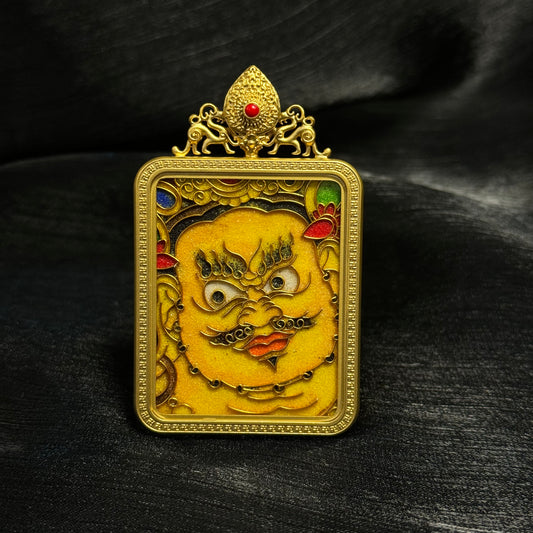
Yellow Jambhala Mini Thangka Pendant Handcrafted • Cloisonné Enamel Series • 24K Gold-Plated Copper Case • 4 × 5 cm
Regular price
$320.00 USD

This Yellow Jambhala Mini Thangka Pendant is a handcrafted devotional pendant presented in the Cloisonné Enamel Series. The piece is created with a copper case electroplated in real 24K gold and designed in a compact 4 × 5 cm format that combines traditional Buddhist symbolism with decorative cloisonné enamel craftsmanship.
Produced as a handcrafted sacred art pendant rather than a mass-produced ornament, the pendant highlights detailed enamel sections defined by metal outlines, creating vibrant color contrasts and textured visual depth. The image of Yellow Jambhala, the wealth deity of Tibetan Buddhism, is presented in a portable miniature thangka format suitable for devotional appreciation and collectible display.
Yellow Jambhala is one of the most well-known wealth deities in Tibetan Buddhism and is traditionally regarded as the chief among the Five Jambhalas. Within Buddhist tradition, Jambhala is associated with generosity, prosperity, and the cultivation of supportive conditions for both spiritual and worldly well-being.
In sacred iconography, Yellow Jambhala represents abundance, merit, and the balanced relationship between material resources and spiritual practice. His imagery is widely respected in Buddhist cultures as a reminder that prosperity should arise from generosity, ethical conduct, and positive intentions.
Yellow Jambhala is traditionally associated with prosperity, the removal of poverty-related obstacles, and the cultivation of favorable conditions for life and practice. Within Buddhist philosophy, such symbolism is understood as encouragement toward generosity, discipline, and the accumulation of merit rather than a guarantee of financial results.
Images of Jambhala are often appreciated as reminders of responsible prosperity — emphasizing that wealth and resources should be used to support well-being, compassion, and beneficial actions. The presence of Jambhala imagery therefore represents a symbolic connection between abundance and ethical living.
Not applicable.
This pendant belongs to the Cloisonné Enamel Series and emphasizes handcrafted ornamental metalwork rather than painted mineral pigment thangka traditions. The artistic approach focuses on decorative cloisonné techniques, where metal partitions outline different enamel areas to form vibrant and precise imagery.
The integration of Buddhist iconography with decorative enamel craftsmanship creates a miniature devotional artwork that balances spiritual symbolism with refined artisan metal design.
The pendant is fully handcrafted and produced using a copper case plated with real 24K gold. The gold electroplating is designed to maintain color stability for approximately one year under normal usage conditions.
The cloisonné enamel technique forms raised metal outlines that hold colored enamel sections, producing a layered decorative surface. This method enhances both durability and the intricate visual appearance of the pendant.
Pendant size: 4 × 5 cm
Format: Mini Thangka Pendant
Craftsmanship: Handcrafted
Material: Copper case with 24K real gold electroplating
This pendant is suitable for collectors of Buddhist sacred art, practitioners who appreciate devotional symbolism, and individuals interested in traditional representations of prosperity and generosity within Buddhist culture.
Its compact format allows it to be worn, carried during travel, or placed in a personal shrine or meditation space as a symbolic object connected with abundance and positive intention.
This item is offered as a cultural and artistic representation of Buddhist symbolism. It is not sold as a guarantee of financial success, prosperity, or specific personal outcomes.
The significance of the pendant lies in its craftsmanship, heritage symbolism, and devotional artistic value. Any meaning associated with Yellow Jambhala should be understood within the context of Buddhist tradition, personal belief, and cultural appreciation.
For all orders exceeding a value of 100USD shipping is offered for free.
Returns will be accepted for up to 10 days of Customer’s receipt or tracking number on unworn items. You, as a Customer, are obliged to inform us via email before you return the item.
Otherwise, standard shipping charges apply. Check out our delivery Terms & Conditions for more details.
Returns will be accepted for up to 10 days of Customer’s receipt or tracking number on unworn items. You, as a Customer, are obliged to inform us via email before you return the item, only in the case of:
– Received the wrong item.
– Item arrived not as expected (ie. damaged packaging).
– Item had defects.
– Over delivery time.
– The shipper does not allow the goods to be inspected before payment.
The returned product(s) must be in the original packaging, safety wrapped, undamaged and unworn. This means that the item(s) must be safely packed in a carton box for protection during transport, possibly the same carton used to ship to you as a customer.
Here’s some of our most similar products people are buying. Click to discover trending style.