


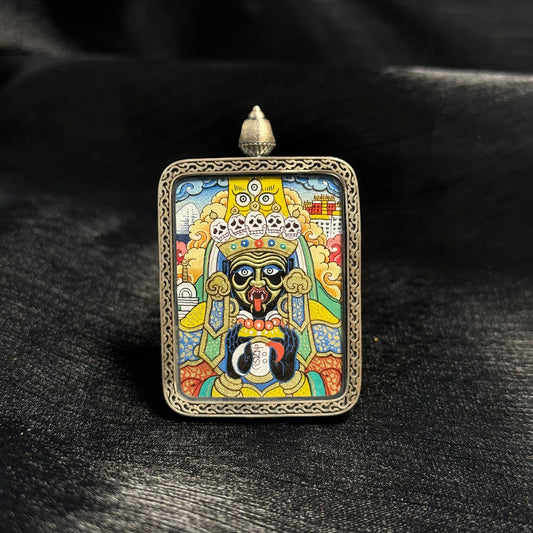
Zaki Lhamo (Potala Palace Form) Mini Thangka Pendant Hand-Painted • Mineral Pigments • Rebgong Tibetan Tradition • 3 × 4 cm
Regular price
$3,500.00 USD

This Zaki Lhamo (Potala Palace Form) Mini Thangka Pendant is a finely crafted miniature thangka created in the Rebgong Tibetan painting tradition, one of the most respected thangka art lineages in the Himalayan region. The artwork is fully hand-painted using natural mineral pigments and gold powder, preserving the classical visual discipline of Tibetan sacred painting.
The composition reflects the iconography associated with the Potala Palace tradition of Zaki Lhamo, a form widely revered in Tibetan devotional culture. The small format allows the thangka to function both as a portable devotional image and as a refined collectible of Tibetan Buddhist art.
Zaki Lhamo is a revered goddess in Tibetan cultural tradition, often honored as a protective female deity associated with prosperity and auspicious blessings. Devotion to Zaki Lhamo is especially widespread in Lhasa, where she is connected to the historic Zaki Temple tradition near the Potala Palace.
Within Tibetan spiritual culture, she is regarded as a guardian figure for women and households, symbolizing protective energy, good fortune, and supportive conditions for wellbeing and stability.
In Tibetan devotional practice, Zaki Lhamo is traditionally associated with prosperity, protection, and the cultivation of favorable conditions in life. Devotees often approach this deity with intentions related to well-being, harmony, and the strengthening of positive causes.
Sacred images such as this thangka serve as visual supports for reflection and spiritual intention, encouraging practitioners to cultivate generosity, ethical conduct, and sincere aspiration—qualities believed to support the unfolding of beneficial circumstances.
Not applicable.
This thangka originates from Rebgong (Regong / Tongren), a historic center of Tibetan thangka painting located in the Amdo region. Rebgong art is internationally recognized for its precise linework, balanced iconographic proportions, and highly detailed compositions.
Artists trained in this lineage follow traditional methods passed down through generations, ensuring that each painting is individually created rather than industrially produced, preserving the artistic and cultural authenticity of Tibetan thangka craftsmanship.
The painting is created using natural mineral pigments, a classical medium used in traditional thangka painting for its durability and vibrant color depth.
Key craftsmanship features include:
Gold powder detailing applied to sacred ornaments and decorative elements
Fine and fluid brushwork characteristic of Rebgong thangka artists
Carefully layered pigments that create a stable and luminous visual texture
These techniques produce a miniature painting that reflects the precision and refinement of traditional Himalayan sacred art.
Painting size: 3 × 4 cm
Format: Mini Thangka Pendant Painting
Technique: Hand-painted with mineral pigments and gold powder
Origin: Rebgong Tibetan Thangka tradition
Each piece is presented with a presentation gift box and a certificate of collection, making it suitable for preservation or gifting.
This miniature thangka is suitable for:
Practitioners seeking a portable sacred image for personal devotion
Collectors of Tibetan miniature thangka paintings
Meditation spaces or personal shrines
Individuals who appreciate traditional Himalayan sacred art
Its compact size also makes it convenient for travel altars or personal contemplative spaces.
This thangka is offered as a cultural and artistic representation of Tibetan devotional imagery. In Tibetan tradition, sacred images serve as supports for contemplation, mindfulness, and spiritual aspiration.
The artwork is not presented as a guarantee of specific outcomes. Instead, it reflects the symbolic meaning, artistic heritage, and spiritual culture of Tibetan thangka painting.
For all orders exceeding a value of 100USD shipping is offered for free.
Returns will be accepted for up to 10 days of Customer’s receipt or tracking number on unworn items. You, as a Customer, are obliged to inform us via email before you return the item.
Otherwise, standard shipping charges apply. Check out our delivery Terms & Conditions for more details.
Returns will be accepted for up to 10 days of Customer’s receipt or tracking number on unworn items. You, as a Customer, are obliged to inform us via email before you return the item, only in the case of:
– Received the wrong item.
– Item arrived not as expected (ie. damaged packaging).
– Item had defects.
– Over delivery time.
– The shipper does not allow the goods to be inspected before payment.
The returned product(s) must be in the original packaging, safety wrapped, undamaged and unworn. This means that the item(s) must be safely packed in a carton box for protection during transport, possibly the same carton used to ship to you as a customer.
Here’s some of our most similar products people are buying. Click to discover trending style.