


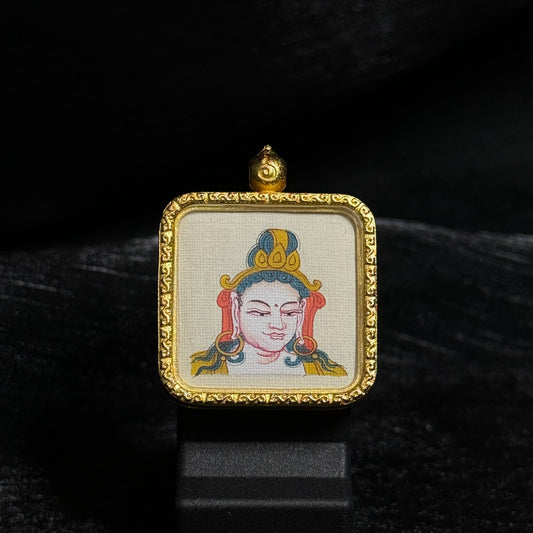
Samantabhadra Bodhisattva Mini Thangka Pendant Hand-Painted • Mineral Pigments • Tibetan Origin • 2 × 2 cm
Regular price
$1,150.00 USD

This Samantabhadra Bodhisattva Mini Thangka Pendant is a compact Tibetan devotional artwork presented in a miniature thangka format. The painting is fully hand-painted by a Tibetan lineage thangka artist using natural mineral pigments, preserving the traditional techniques of Himalayan sacred painting.
Originating from Tibet, the artwork follows classical thangka iconographic structure and brush discipline. Despite its miniature size, the piece maintains the symbolic accuracy and artistic detail associated with authentic Tibetan thangka painting, making it suitable for personal devotion, portable practice, or cultural collection.
Samantabhadra Bodhisattva is one of the most respected bodhisattvas in Mahayana Buddhism and is widely known as the embodiment of great conduct, virtuous action, and spiritual dedication. In Buddhist tradition, Samantabhadra is often depicted as the right attendant of Shakyamuni Buddha, representing the perfection of enlightened action and the realization of virtuous practice.
The bodhisattva symbolizes the union of wisdom and compassionate action, encouraging practitioners to transform understanding into meaningful deeds that benefit all sentient beings.
Samantabhadra imagery is traditionally associated with virtuous conduct, determination, and the cultivation of noble intentions. In Buddhist practice, sacred images of Samantabhadra serve as reminders to maintain ethical action, perseverance, and clarity of purpose in everyday life.
In traditional symbolic associations, Samantabhadra Bodhisattva is regarded as the guardian deity connected with the Chinese Zodiac signs Dragon and Snake. Within this symbolic framework, the bodhisattva represents qualities such as initiative, resilience, and forward progress, encouraging individuals to cultivate strong determination and responsible action.
Samantabhadra is also sometimes connected symbolically with the Western horoscope sign Capricorn (December 22 – January 19). Capricorn is traditionally associated with responsibility, discipline, and perseverance, qualities that resonate with the bodhisattva’s representation of steadfast practice and virtuous accomplishment.
As with all sacred imagery, the spiritual significance of the thangka is related to personal intention, ethical conduct, and consistent practice, rather than guaranteed outcomes.
Not applicable.
This miniature thangka originates from the Tibetan thangka painting tradition and is created by a lineage-trained Tibetan artist. The work follows traditional iconographic proportions and compositional discipline preserved in Himalayan sacred art.
Each piece is individually hand-painted, reflecting the continuity of Tibetan thangka artistic heritage rather than factory-produced images.
The painting is created using natural mineral pigments, a material traditionally used in Himalayan thangka painting for its color depth and long-term stability.
The thangka is fully hand-painted, with layered pigment application and careful brushwork that preserves clarity and symbolic detail within the miniature composition.
Product type: Mini Thangka Pendant
Painting size: 2 × 2 cm
Origin: Tibet
Technique: Hand-painted thangka
Pigments: Natural mineral pigments
The compact size allows the piece to function as a portable sacred image suitable for travel or personal devotional practice.
This piece may be suitable for:
Buddhist practitioners maintaining portable sacred imagery
Collectors of Himalayan thangka art
Individuals creating a personal shrine or meditation space
Those who prefer portable devotional artwork for travel
This artwork is presented as a religious and cultural object rooted in Tibetan Buddhist tradition. Sacred images hold symbolic significance within Buddhist practice; however, the object itself does not guarantee specific spiritual or material outcomes.
Its value lies in artistic heritage, devotional symbolism, and support for personal reflection or cultural appreciation.
For all orders exceeding a value of 100USD shipping is offered for free.
Returns will be accepted for up to 10 days of Customer’s receipt or tracking number on unworn items. You, as a Customer, are obliged to inform us via email before you return the item.
Otherwise, standard shipping charges apply. Check out our delivery Terms & Conditions for more details.
Returns will be accepted for up to 10 days of Customer’s receipt or tracking number on unworn items. You, as a Customer, are obliged to inform us via email before you return the item, only in the case of:
– Received the wrong item.
– Item arrived not as expected (ie. damaged packaging).
– Item had defects.
– Over delivery time.
– The shipper does not allow the goods to be inspected before payment.
The returned product(s) must be in the original packaging, safety wrapped, undamaged and unworn. This means that the item(s) must be safely packed in a carton box for protection during transport, possibly the same carton used to ship to you as a customer.
Here’s some of our most similar products people are buying. Click to discover trending style.