


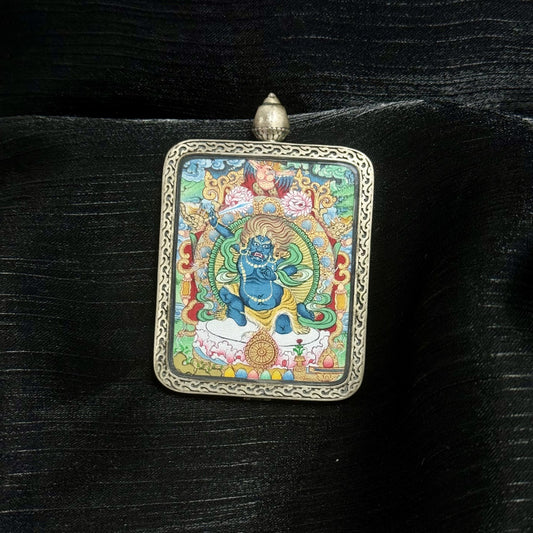
Acalanatha (Fudo Myo-o) Mini Thangka Pendant Hand-Painted • Mineral Pigments • Tibetan Origin • 4 × 5 cm
Regular price
$8,500.00 USD

This Acalanatha (Fudo Myo-o) Mini Thangka Pendant is a fully hand-painted Tibetan thangka crafted in the Miansa (Menri) lineage of Tibet. Created using natural mineral pigments known for long-term color stability, the 4 × 5 cm painting is presented in a Dunhuang Nine-Color Deer silver gawu-style case.
Produced in Tibet according to traditional proportional systems, this piece represents a collectible-grade devotional artwork. It is created through manual painting methods rather than factory reproduction, preserving the integrity of classical Tibetan thangka craftsmanship.
Acalanatha, known in Japanese tradition as Fudo Myo-o, is regarded as the chief of the Five Wisdom Kings and a wrathful manifestation of enlightened intent. In Vajrayana Buddhism, he embodies unwavering resolve and the power to cut through ignorance and delusion.
Symbolically, Acalanatha represents disciplined strength, clarity of purpose, and protective wisdom. His fierce iconography reflects the compassionate function of removing obstacles that hinder spiritual development, while encouraging courage and moral steadfastness.
For individuals born in the Chinese Zodiac year of the Rooster, Acalanatha is traditionally regarded as a guardian deity. The Rooster is associated with precision, diligence, and responsibility, qualities aligned with disciplined action and inner resolve. In Western astrology, Aries (March 21 – April 19) is connected with courage, initiative, and decisive movement—attributes that resonate with Acalanatha’s symbolism of obstacle removal and determined clarity.
Acalanatha is traditionally associated with the removal of obstacles and the cultivation of disciplined awareness. In tantric Buddhist logic, wrathful deities symbolize fierce compassion—cutting through confusion and reinforcing ethical self-control rather than expressing aggression.
Practice related to Acalanatha emphasizes intention, moral grounding, and the steady application of effort. Rather than guaranteeing outcomes, the symbolic meaning points toward developing resilience, decisive wisdom, and the ability to face adversity with stability and clarity. Transformation arises through causes and conditions cultivated by sustained practice.
Not applicable.
Originating from Tibet, this piece follows the Miansa (Menri) stylistic lineage historically associated with Shigatse workshops. The composition adheres to classical Tibetan proportional systems preserved within traditional monastic training frameworks.
Each miniature thangka is fully hand-painted with controlled linework, balanced composition, and layered mineral pigmentation. It is produced as lineage-based devotional art rather than industrial print production.
The painting is executed using natural mineral pigments valued for depth, saturation, and long-term durability. Mineral-based coloration provides a textured visual quality distinct from synthetic print methods.
The artwork is housed in a Dunhuang Nine-Color Deer silver gawu case, designed to protect the miniature thangka while preserving its devotional portability. The structure supports long-term preservation and heirloom-level collection.
Painting size: 4 × 5 cm
Format: Mini Thangka Pendant
Origin: Tibet
Pigments: Natural mineral pigments
Case: Dunhuang Nine-Color Deer silver gawu case
Suitable for:
Practitioners engaging in wrathful deity or obstacle-clearing practice
Individuals born under the Rooster zodiac sign
Aries individuals resonating with themes of courage and decisiveness
Collectors of Tibetan miniature thangka art
Personal meditation, travel shrine use, or devotional altar placement
This product is a traditional Tibetan religious artwork intended for cultural appreciation, devotional support, and artistic collection. It is not presented as a guarantee of specific life outcomes.
In Buddhist understanding, obstacle removal and clarity arise through ethical conduct, disciplined effort, and accumulated causes and conditions. This thangka functions as a contemplative support rooted in authentic artistic lineage.
For all orders exceeding a value of 100USD shipping is offered for free.
Returns will be accepted for up to 10 days of Customer’s receipt or tracking number on unworn items. You, as a Customer, are obliged to inform us via email before you return the item.
Otherwise, standard shipping charges apply. Check out our delivery Terms & Conditions for more details.
Returns will be accepted for up to 10 days of Customer’s receipt or tracking number on unworn items. You, as a Customer, are obliged to inform us via email before you return the item, only in the case of:
– Received the wrong item.
– Item arrived not as expected (ie. damaged packaging).
– Item had defects.
– Over delivery time.
– The shipper does not allow the goods to be inspected before payment.
The returned product(s) must be in the original packaging, safety wrapped, undamaged and unworn. This means that the item(s) must be safely packed in a carton box for protection during transport, possibly the same carton used to ship to you as a customer.
Here’s some of our most similar products people are buying. Click to discover trending style.