


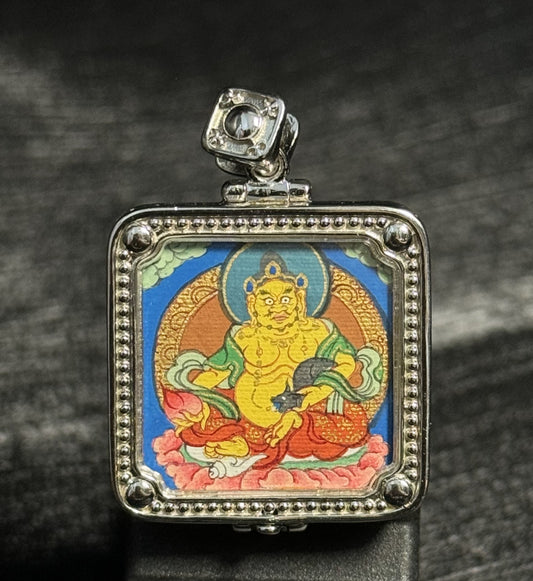
Yellow Jambhala Mini Thangka Pendant Hand-Painted • Mineral Pigments • Rebgong Thangka Tradition • Painting Size 2 × 2 cm
Regular price
$2,300.00 USD

This Yellow Jambhala Mini Thangka Pendant is a sacred miniature thangka painting created in the Rebgong (Regong) Thangka tradition of Amdo Tibet. The artwork is hand-painted by a trained lama artist using natural mineral pigments, following traditional thangka composition and iconographic proportions. Despite its small size, the painting preserves the refined details and vibrant color layering characteristic of classical Himalayan sacred art.
As part of the Rebgong Thangka Series, this piece reflects the highly respected Regong painting lineage recognized for its delicate brushwork, rich mineral colors, and devotion-based artistic process. The natural mineral pigments used in the painting are known for their long-term color stability, allowing the artwork to maintain its appearance for generations when properly preserved.
Yellow Jambhala is one of the Five Wealth Deities (Five Jambhalas) revered in Tibetan Buddhism and widely practiced across multiple traditions including Gelug, Kagyu, Sakya, and Nyingma lineages. As the yellow manifestation of the wealth deity, he symbolizes prosperity, generosity, and the removal of poverty and obstacles related to material hardship.
In Buddhist symbolism, Yellow Jambhala represents the transformation of wealth into a tool for supporting virtuous activity, charity, and spiritual cultivation. His imagery emphasizes both abundance and the responsible use of resources, reflecting the balance between material well-being and spiritual development.
In traditional Buddhist practice, Yellow Jambhala is traditionally associated with prosperity, merit accumulation, and the alleviation of financial difficulties. Devotees often keep his image as a reminder of cultivating generosity, ethical conduct, and gratitude.
Within the broader framework of Buddhist teachings, beneficial circumstances are understood to arise through the combination of positive intention, virtuous action, and favorable conditions. Sacred images therefore function as a symbolic support for spiritual focus rather than a guarantee of specific outcomes.
Not applicable.
This artwork depicts a single deity.
This painting originates from the Rebgong Thangka tradition (Regong Art) of Amdo Tibet, a UNESCO-recognized heritage tradition known for its highly disciplined iconography and refined artistic techniques. Rebgong artists follow strict proportional guidelines passed down through generations of master painters.
The thangka is hand-painted by a lama-trained artist, ensuring that the composition, colors, and symbolic elements remain faithful to classical Tibetan thangka standards. Each piece represents a continuation of traditional sacred art rather than factory-produced imagery.
The artwork is created using natural mineral pigments, one of the defining materials of traditional Himalayan thangka painting. Mineral pigments produce rich, stable colors and allow for subtle layering techniques that enhance the depth and clarity of the image.
Key craftsmanship elements include:
Hand-painted miniature thangka
Natural mineral pigments
Rebgong thangka painting techniques
Traditional iconographic proportions
Because mineral pigments are highly stable, the painting is capable of maintaining its color integrity for long periods, making it suitable for both devotional use and long-term collection.
Painting size: 2 × 2 cm
Format: Mini Thangka Pendant
The extremely compact painting size reflects the precision and skill required in miniature thangka work while allowing the artwork to function as a portable devotional image or collectible sacred artwork.
This miniature thangka pendant is suitable for:
Buddhist practitioners maintaining devotional images for practice
Collectors of Rebgong thangka art
Individuals creating personal meditation spaces or portable shrine setups
Due to its handcrafted nature and traditional lineage, it also holds value as a collectible Himalayan sacred artwork.
This piece is presented as a traditional Tibetan Buddhist artwork and devotional object. Sacred images in Himalayan cultures are valued for their symbolic meaning, artistic craftsmanship, and their role in supporting spiritual reflection and practice.
The artwork does not guarantee specific outcomes, and its significance should be understood within the context of cultural heritage, devotional symbolism, and personal spiritual interpretation.
For all orders exceeding a value of 100USD shipping is offered for free.
Returns will be accepted for up to 10 days of Customer’s receipt or tracking number on unworn items. You, as a Customer, are obliged to inform us via email before you return the item.
Otherwise, standard shipping charges apply. Check out our delivery Terms & Conditions for more details.
Returns will be accepted for up to 10 days of Customer’s receipt or tracking number on unworn items. You, as a Customer, are obliged to inform us via email before you return the item, only in the case of:
– Received the wrong item.
– Item arrived not as expected (ie. damaged packaging).
– Item had defects.
– Over delivery time.
– The shipper does not allow the goods to be inspected before payment.
The returned product(s) must be in the original packaging, safety wrapped, undamaged and unworn. This means that the item(s) must be safely packed in a carton box for protection during transport, possibly the same carton used to ship to you as a customer.
Here’s some of our most similar products people are buying. Click to discover trending style.