


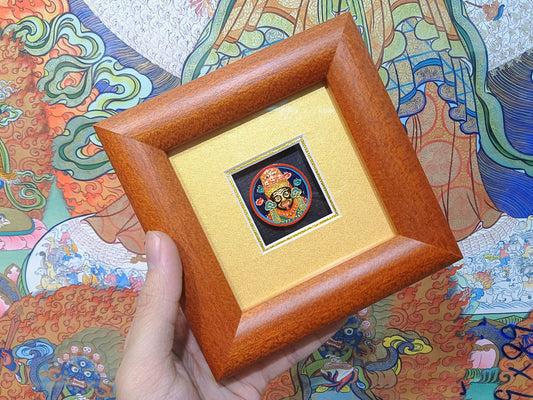
Zaki Ram Hand-Painted Tsa-Tsa Thangka Table Display Mineral Pigments • Nepalese Thangka Style • Indonesian Cypress Frame • Desk Shrine Format
Regular price
$450.00 USD

This Zaki Ram Hand-Painted Tsa-Tsa Thangka Table Display is a devotional Buddhist artwork created as a painted clay tsa-tsa sculpture combined with traditional thangka painting techniques. The sacred image is hand-painted by an artist using mineral pigments, producing vivid colors and a layered visual depth that highlights the expressive iconography of the protector goddess.
The piece is mounted in a solid Indonesian cypress wood frame, transforming the tsa-tsa into a compact desk shrine display suitable for home altars, meditation spaces, or cultural art collections. The use of mineral pigments and hand-painting reflects the visual language of Himalayan thangka traditions, where sacred images are created as devotional art rather than mass-produced decoration.
Zaki Ram (Zha Ji La Mu) is a widely revered female protector deity honored across Tibetan cultural regions. She is often regarded as a guardian goddess associated with prosperity, protection, and supportive fortune, and her worship is especially popular among devotees seeking stability and harmonious life conditions.
Within Himalayan Buddhist culture, protector deities symbolize the active protection of the Dharma and the removal of obstacles. Zaki Ram embodies a powerful yet compassionate presence, combining protective strength with the symbolism of prosperity and well-being.
In traditional Himalayan belief systems, Zaki Ram is traditionally associated with protection, good fortune, and the removal of life obstacles. Devotees often keep her image in personal spaces as a symbolic reminder to cultivate generosity, diligence, and positive intention.
From the perspective of Buddhist practice, sacred imagery functions as a support for mindfulness and spiritual aspiration. Beneficial circumstances are understood to arise through the combination of ethical action, sincere intention, and favorable conditions, rather than through guaranteed outcomes.
Not applicable.
This artwork depicts a single deity.
The artwork draws inspiration from Himalayan thangka painting traditions, where sacred images are created according to established iconographic proportions and devotional artistic practice. The combination of hand-painted mineral pigments with a tsa-tsa clay form reflects a fusion of traditional devotional sculpture and thangka painting aesthetics.
Each piece is artist-painted rather than factory printed, preserving the handcrafted character and spiritual symbolism typical of Himalayan religious art.
This artwork incorporates several traditional elements of Himalayan devotional craft:
Hand-painted mineral pigments
Clay tsa-tsa relief sculpture
Traditional thangka color palette
Indonesian cypress wood frame mounting
The mineral pigments create vivid colors and subtle depth, while the tsa-tsa base adds a slightly raised relief structure, giving the artwork a three-dimensional visual presence suitable for altar or decorative display.
Format: Framed Tsa-Tsa Thangka Desk Display
Features:
Hand-painted mineral pigment tsa-tsa image
Solid Indonesian cypress wood frame
Compact tabletop shrine format
This format allows the artwork to be displayed easily in home altars, meditation rooms, personal desks, or shop spaces.
This artwork is suitable for:
Buddhist practitioners maintaining a home altar
Collectors of Himalayan religious art
Individuals creating a meditation space, shop display, or personal shrine
The compact framed format makes it appropriate for tabletop display in homes, studios, or small devotional spaces.
This item is presented as a traditional Buddhist cultural artwork and devotional object. In Himalayan traditions, sacred imagery is valued for its symbolic meaning and for supporting personal reflection, faith, and spiritual practice.
The artwork does not guarantee specific outcomes, and its significance should be understood within the context of cultural heritage, artistic craftsmanship, and individual spiritual interpretation.
For all orders exceeding a value of 100USD shipping is offered for free.
Returns will be accepted for up to 10 days of Customer’s receipt or tracking number on unworn items. You, as a Customer, are obliged to inform us via email before you return the item.
Otherwise, standard shipping charges apply. Check out our delivery Terms & Conditions for more details.
Returns will be accepted for up to 10 days of Customer’s receipt or tracking number on unworn items. You, as a Customer, are obliged to inform us via email before you return the item, only in the case of:
– Received the wrong item.
– Item arrived not as expected (ie. damaged packaging).
– Item had defects.
– Over delivery time.
– The shipper does not allow the goods to be inspected before payment.
The returned product(s) must be in the original packaging, safety wrapped, undamaged and unworn. This means that the item(s) must be safely packed in a carton box for protection during transport, possibly the same carton used to ship to you as a customer.
Here’s some of our most similar products people are buying. Click to discover trending style.