


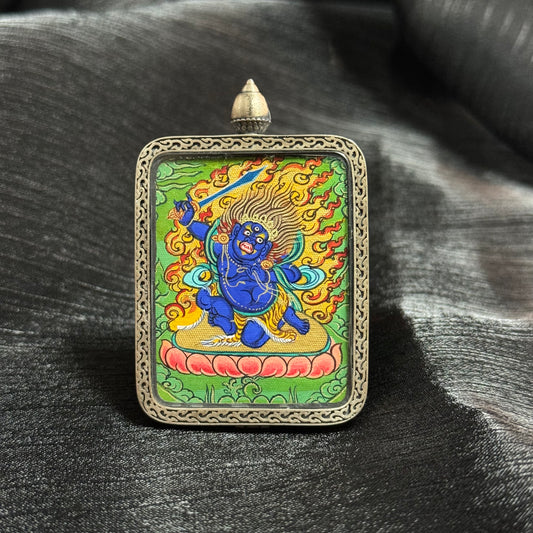
Acalanatha (Fudo Myo-o) Mini Thangka Pendant Hand-Painted • Mineral Pigments • Rebgong Origin • 3.5 × 4.5 cm
Regular price
$4,000.00 USD

This Acalanatha (Fudo Myo-o) Mini Thangka Pendant presents the powerful Wisdom King in a refined miniature thangka format inspired by the Rebgong (Regong) thangka painting tradition, a renowned Himalayan artistic lineage recognized for its precision and vivid mineral pigments.
The painting is fully hand-painted using natural mineral pigments by a trained monastic thangka artist. As part of the Emerald Radiance Thangka Series, the composition emphasizes harmonious green tones that symbolize vitality, clarity, and spiritual resilience while maintaining the traditional iconographic proportions of Tibetan sacred art.
Acalanatha, also known as Fudo Myo-o, is one of the most important Wisdom Kings in Buddhist esoteric traditions and is often regarded as the chief of the Five Wisdom Kings. In Vajrayana and East Asian Buddhist traditions, he represents the fierce and immovable determination of enlightened wisdom.
The name Acalanatha means “The Immovable One,” symbolizing unwavering resolve, discipline, and the power to transform ignorance into wisdom. His image represents the strength required to overcome obstacles and remain firmly committed to the path of spiritual development.
In Buddhist tradition, Acalanatha is traditionally associated with removing obstacles, strengthening courage, and cultivating unwavering determination in spiritual practice and daily life.
Within cultural Buddhist traditions, Acalanatha is also regarded as a guardian deity for individuals born in the Chinese zodiac year of the Rooster, symbolizing courage, clarity of purpose, and the ability to overcome challenges.
Rooster (Chinese Zodiac) — traditionally associated with dispelling negative influences, strengthening courage, and supporting stable life conditions and personal progress.
In Western astrological symbolism, Aries (March 21 – April 19) is sometimes connected with the qualities represented by Acalanatha, such as decisiveness, courage, and the determination to remove obstacles and move forward with clarity.
These associations reflect cultural traditions that connect the Wisdom King with strength, discipline, and transformative wisdom.
Not applicable.
This thangka depicts a single deity composition.
This miniature thangka originates from Rebgong (Regong), Amdo, a historically important center for Tibetan Buddhist thangka painting.
Rebgong thangka art is internationally recognized for its precise linework, harmonious compositions, and vibrant mineral pigment colors. Each piece is individually hand-painted following traditional iconographic proportions, preserving the lineage-based artistic methods of Himalayan sacred painting.
The artwork is fully hand-painted using natural mineral pigments, materials historically valued in traditional thangka painting for their durability and vibrant color intensity.
Layered pigment application combined with careful brushwork creates a rich visual texture and long-lasting color stability. These traditional materials are known for maintaining their brilliance for generations, making the piece suitable for both devotional appreciation and long-term collection.
Painting size: 3.5 × 4.5 cm
Format: Mini Thangka Pendant
Each piece is individually hand-painted, and slight variations may occur as part of the authentic thangka painting process.
Included with the piece:
Gift box and certificate of collection
This miniature thangka pendant is suitable for:
Buddhist practitioners maintaining devotional imagery
Collectors of Himalayan thangka art
Individuals creating a portable meditation or personal shrine
Its compact format allows the sacred image to accompany daily life while preserving traditional artistic integrity.
This thangka pendant is presented as a religious artwork rooted in Tibetan Buddhist culture and the Rebgong thangka painting tradition.
Its significance lies in its cultural symbolism, artistic heritage, and devotional context. It is not intended to guarantee specific outcomes, but to serve as a contemplative and cultural object that supports appreciation of Himalayan sacred art.
For all orders exceeding a value of 100USD shipping is offered for free.
Returns will be accepted for up to 10 days of Customer’s receipt or tracking number on unworn items. You, as a Customer, are obliged to inform us via email before you return the item.
Otherwise, standard shipping charges apply. Check out our delivery Terms & Conditions for more details.
Returns will be accepted for up to 10 days of Customer’s receipt or tracking number on unworn items. You, as a Customer, are obliged to inform us via email before you return the item, only in the case of:
– Received the wrong item.
– Item arrived not as expected (ie. damaged packaging).
– Item had defects.
– Over delivery time.
– The shipper does not allow the goods to be inspected before payment.
The returned product(s) must be in the original packaging, safety wrapped, undamaged and unworn. This means that the item(s) must be safely packed in a carton box for protection during transport, possibly the same carton used to ship to you as a customer.
Here’s some of our most similar products people are buying. Click to discover trending style.