


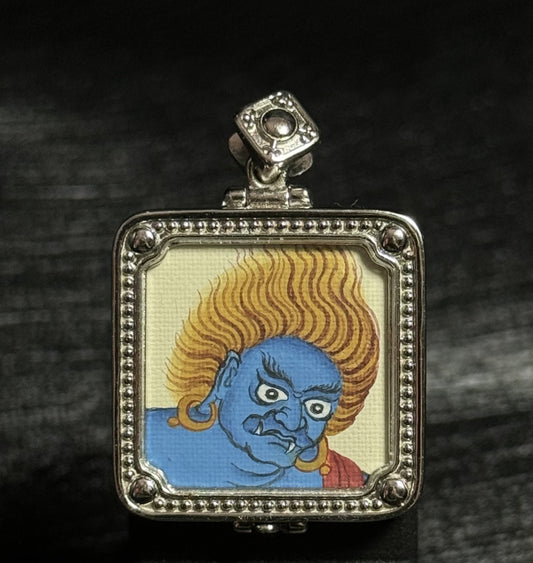
Acalanatha (Fudō Myō-ō) Mini Thangka Pendant Hand-Painted • Natural Mineral Pigments • Tibetan Origin • Painting Size 2 × 2 cm
Regular price
$1,750.00 USD

This Acalanatha (Fudō Myō-ō) Mini Thangka Pendant is a sacred miniature thangka painting created within the traditional Tibetan thangka lineage. The artwork is hand-painted by a Tibetan master artist using natural mineral pigments, following classical iconographic proportions preserved in Himalayan Buddhist art.
The painting measures 2 × 2 cm, demonstrating precise brushwork and devotional craftsmanship despite its miniature scale. Natural mineral pigments, widely used in traditional thangka painting, provide vivid color depth and long-term stability, allowing the artwork to maintain its brilliance for generations when properly preserved. Encased in a 925 silver plated pendant setting, the piece functions as both a portable sacred image and a collectible miniature thangka artwork.
Acalanatha (Fudō Myō-ō), known in Tibetan Buddhism as a wrathful manifestation connected to enlightened wisdom, is regarded as one of the Five Wisdom Kings (Five Vidyarajas) and a powerful protector figure. He represents the immovable determination of enlightened awareness and the force that cuts through ignorance and harmful influences.
In Buddhist symbolism, Acalanatha embodies discipline, courage, and unwavering resolve. His fierce appearance reflects the compassionate intention to protect practitioners and remove obstacles that hinder spiritual progress.
In traditional Buddhist practice, Acalanatha is traditionally associated with courage, obstacle removal, and inner determination. Devotional images of this deity often serve as reminders to cultivate discipline, clarity, and resilience when facing challenges in both spiritual and everyday life.
Within Buddhist teachings, favorable outcomes arise through the combination of right intention, ethical conduct, and supportive conditions. Sacred images therefore support reflection, devotion, and personal cultivation rather than guaranteeing specific results.
Acalanatha is also traditionally regarded as a guardian deity for individuals born in the Chinese Zodiac year of the Rooster, symbolizing courage, stability, and protection. In certain astrological traditions, the deity is additionally associated with Aries, representing determination, decisive action, and the strength to overcome obstacles.
Not applicable.
This artwork depicts a single deity.
This miniature thangka originates from the Tibetan thangka painting tradition, an artistic lineage preserved for centuries within Tibetan monasteries and artisan communities. Thangka artists follow strict iconographic measurements and color symbolism passed down through generations.
The painting is hand-created by a Tibetan master artist, ensuring authenticity in sacred proportions, composition, and symbolic elements. Each piece reflects traditional craftsmanship rather than factory production.
The painting is created using natural mineral pigments, a defining material of authentic Himalayan thangka art. Mineral pigments provide deep color saturation and exceptional durability.
Craftsmanship highlights include:
Hand-painted miniature thangka
Natural mineral pigments
Traditional Tibetan iconographic proportions
925 silver plated pendant setting
Lineage-based thangka painting techniques
These materials allow the artwork to maintain its visual quality for long-term preservation, making it suitable for both devotional use and art collection.
Painting size: 2 × 2 cm
Format: Mini Thangka Pendant
Pendant material: 925 silver plated setting
The compact size allows the sacred image to function as a portable devotional thangka, suitable for personal shrines, meditation practice, or travel altars.
This miniature thangka pendant is suitable for:
Buddhist practitioners maintaining devotional imagery
Collectors of Tibetan thangka art
Individuals creating portable shrines or meditation spaces
It is also traditionally associated with individuals born in the Year of the Rooster and with Aries, symbolizing courage, protection, and decisiveness.
This item is presented as a traditional Tibetan Buddhist artwork and devotional object. Sacred imagery in Himalayan cultures is valued for its cultural heritage, artistic craftsmanship, and its role in supporting reflection and spiritual practice.
The artwork does not guarantee specific outcomes, and its significance should be understood within the context of cultural symbolism, artistic tradition, and personal interpretation.
For all orders exceeding a value of 100USD shipping is offered for free.
Returns will be accepted for up to 10 days of Customer’s receipt or tracking number on unworn items. You, as a Customer, are obliged to inform us via email before you return the item.
Otherwise, standard shipping charges apply. Check out our delivery Terms & Conditions for more details.
Returns will be accepted for up to 10 days of Customer’s receipt or tracking number on unworn items. You, as a Customer, are obliged to inform us via email before you return the item, only in the case of:
– Received the wrong item.
– Item arrived not as expected (ie. damaged packaging).
– Item had defects.
– Over delivery time.
– The shipper does not allow the goods to be inspected before payment.
The returned product(s) must be in the original packaging, safety wrapped, undamaged and unworn. This means that the item(s) must be safely packed in a carton box for protection during transport, possibly the same carton used to ship to you as a customer.
Here’s some of our most similar products people are buying. Click to discover trending style.