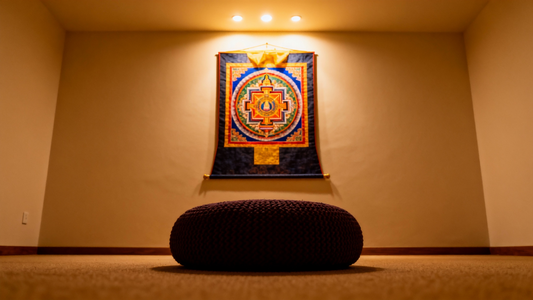

Akashagarbha Bodhisattva The Bodhisattva of Infinite Wisdom, Merit, and Abundance

In Mahayana Buddhism, Akashagarbha Bodhisattva (Sanskrit: Ākāśagarbha) occupies a unique and profound position among the Eight Great Bodhisattvas. His name, which translates as “Treasury of Infinite Space,” expresses a core Buddhist teaching: true abundance does not arise from possession, but from wisdom, merit, and ethical clarity that are as boundless as space itself.
Known in Chinese Buddhism as Xūkōngzàng Púsà (虚空藏菩萨) and in Japanese tradition as Kokūzō Bosatsu, Akashagarbha has been revered for centuries as a guardian of wisdom, virtue, learning, and sustainable prosperity. His image appears widely in Buddhist art, ritual practice, and thangka painting traditions across Tibet, China, Nepal, and Japan.
The Meaning Behind the Name “Akashagarbha”
The Sanskrit word ākāśa refers to space—open, unobstructed, limitless—while garbha means treasury, womb, or source. Together, Akashagarbha conveys the idea of an inexhaustible storehouse of wisdom and merit.
Unlike deities associated with material wealth alone, Akashagarbha represents a deeper principle:
when wisdom and ethical conduct are cultivated, supportive conditions—both material and spiritual—naturally follow.
Classical Buddhist texts describe Akashagarbha as a bodhisattva who bestows precious treasures in response to sincere vows and virtuous roots. These “treasures” are not limited to material gain, but include clarity of mind, learning, memory, supportive relationships, and the ability to act wisely in complex situations.
Akashagarbha Bodhisattva in Buddhist Doctrine
Traditional sources describe two principal accounts of Akashagarbha Bodhisattva’s origin:
1. Emanation from Manjushri Bodhisattva
Some traditions explain Akashagarbha as manifesting from the wisdom essence of Manjushri, the bodhisattva of insight and learning. This lineage emphasizes Akashagarbha’s close association with knowledge, study, and intellectual clarity.
2. Manifestation Through Vast Vows and Merit
Other teachings describe Akashagarbha as arising from immeasurable vows cultivated over countless lifetimes. In this view, Akashagarbha embodies the fruition of compassion, discipline, and moral clarity—an ideal of wisdom matured through practice.
Within esoteric Buddhism, Akashagarbha occupies a central role as the principal deity of the Akashagarbha Court in the Womb Realm Mandala (Garbhadhātu). Together with Kṣitigarbha Bodhisattva, he forms a symbolic structure related to purification, liberation, and the transformation of worldly conditions through insight.
Iconography: How Akashagarbha Is Depicted in Buddhist Art
In Buddhist and Himalayan thangka art, Akashagarbha Bodhisattva is portrayed with precise and meaningful symbolism:
-
A Five-Buddha Crown, representing the Five Wisdoms
-
A wisdom sword held in the right hand, cutting through ignorance and confusion
-
A lotus bearing a wish-fulfilling jewel in the left hand, symbolizing purity and inexhaustible blessings
-
Seated upon a lotus throne, indicating transcendence beyond attachment
Each element reflects the balance between wisdom (prajñā) and skillful means (upāya)—a central theme in Mahayana Buddhism.
Akashagarbha and Wisdom-Based Abundance
One of the most widely recognized aspects of Akashagarbha Bodhisattva is his association with abundance rooted in wisdom.
Rather than promising sudden wealth or external rewards, Akashagarbha represents the idea that:
-
Clear thinking creates opportunity
-
Ethical conduct attracts trust and support
-
Generosity strengthens relationships
-
Wisdom sustains long-term prosperity
For this reason, Akashagarbha is often revered as a guardian of benefactors, helpful connections, and meaningful networks, reflecting the belief that wise action naturally draws support from all directions.
Akashagarbha in East Asian Buddhist Practice
From the 8th century onward, devotion to Akashagarbha spread widely throughout East Asia, particularly in Japan. There, he became known as Kokūzō Bosatsu, and specialized esoteric practices emerged around his veneration.
One of the most famous is the Gumonjihō (Memory and Wisdom Practice), traditionally undertaken by monks and scholars to strengthen:
-
Memory and concentration
-
Intellectual discipline
-
Mental clarity and focus
This association made Akashagarbha especially revered among students, scholars, and practitioners engaged in deep study.
Later developments gave rise to the Five Akashagarbha Bodhisattvas, a system aligning five manifestations of Akashagarbha with the Five Wisdom Buddhas. The renowned Five Akashagarbha statues at Jingo-ji Temple in Kyoto are today recognized as Japanese national treasures, reflecting the enduring cultural and spiritual influence of this bodhisattva.
Akashagarbha Bodhisattva in Thangka Tradition
In Tibetan and Himalayan Buddhist art, Akashagarbha Bodhisattva frequently appears in thangka paintings, including wall hangings, miniature thangkas, and portable gau pendants.
Thangkas depicting Akashagarbha are valued for:
-
Preserving precise iconographic standards
-
Serving as contemplative aids for study and reflection
-
Representing a living transmission of Buddhist philosophy through art
Many collectors and practitioners choose Akashagarbha thangkas not only for devotion, but also for their symbolic emphasis on wisdom, learning, and ethical prosperity.
You can explore a curated selection of Akashagarbha Bodhisattva thangkas here:
👉 https://thangkamarket.com/collections/shop-thangka-by-deity-akashagarbha-bodhisattva
Learning More About Buddhist Art and Symbolism
Understanding a bodhisattva like Akashagarbha is part of a broader journey into Buddhist philosophy, art, and culture. If you would like to deepen your knowledge of thangka traditions, iconography, and spiritual symbolism, you may find the Learning Center helpful:
👉 https://thangkamarket.com/collections/learning-center-learning-center
This section offers background articles designed to help readers approach thangka art with cultural awareness and informed appreciation.
Akashagarbha for Contemporary Life
In modern contexts, Akashagarbha Bodhisattva is often understood as a symbol of:
-
Wisdom-based decision making
-
Sustainable success rooted in integrity
-
Supportive relationships and ethical influence
-
Inner stability amid uncertainty
Rather than focusing on external accumulation, Akashagarbha reminds us that clarity, generosity, and wisdom form the foundation of lasting abundance.
Exploring Thangka as Cultural and Spiritual Art
Thangkas are not merely decorative objects; they are visual teachings that bridge philosophy, ritual, and artistic discipline. For those interested in exploring authentic thangka art across different deities and traditions, you may browse the full thangka collection here:
👉 https://thangkamarket.com/collections/shop-thangka
Each piece reflects a lineage of craftsmanship, symbolism, and cultural continuity.
Conclusion
Akashagarbha Bodhisattva stands as a powerful embodiment of a central Buddhist insight:
abundance without wisdom is fragile, but wisdom gives rise to inexhaustible wealth—both inner and outer.
Through his image, teachings, and artistic representations, Akashagarbha invites reflection on how clarity, ethical intention, and generosity shape the conditions of our lives. Whether approached as a subject of study, devotion, or cultural appreciation, he remains a timeless symbol of wisdom that transcends limitation.
Related articles
Long-term Preservation
Dec 14 2025