
What Is Thangka? An Introduction to Himalayan Scroll Art
What Is Thangka? Meaning, Definition & Features of Himalayan Thangka Art
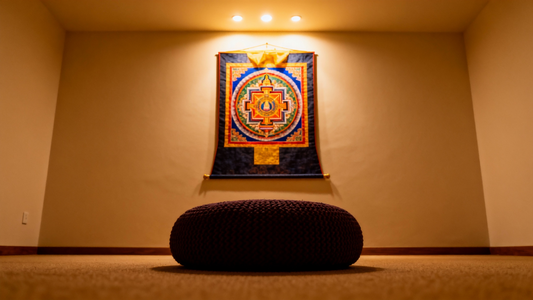
Thangka (also spelled Tangka / Thanka / Thang-ga) is a traditional form of scroll painting originating from the Himalayan region. It is one of the most distinctive and culturally significant art forms within Tibetan and Himalayan traditions. Known for its vibrant mineral pigments, precise composition, and portable scroll-mounted format, Thangka represents a remarkable blend of artistic mastery and cultural storytelling.
As a form of Himalayan scroll painting, Thangka carries centuries of cultural knowledge, symbolism, and artistic craftsmanship, and continues to gain recognition among collectors, scholars, and art enthusiasts around the world.
What Does “Thangka” Mean?
The word “Thangka” comes from Tibetan and can be understood as “a painting that can be rolled up and unrolled.”
It refers to a painting executed on cotton or silk, mounted with silk brocade, and designed for hanging, display, or easy storage.
Key defining features of Thangka include:
-
A portable scroll format
-
Natural mineral and botanical pigments
-
Fully hand-painted craftsmanship
-
Structured composition and symbolic imagery
-
A rich cultural narrative at its core
Key Features of Thangka Art
1. Scroll-Mounted Painting
Thangkas are painted on cloth and framed with silk brocade. Their portable nature allowed them to travel across regions with cultural practitioners, scholars, and traders throughout history.
2. Long-lasting Mineral Pigments
Traditional Thangka painting uses pigments made from natural minerals and plants—such as gold, silver, coral, turquoise, malachite, cinnabar, saffron, and indigo.
These materials give Thangkas their long-lasting brilliance, allowing many centuries-old works to remain vivid today.
3. Precise and Structured Composition
Thangka painting follows strict proportional and compositional guidelines. The creation process typically includes:
-
Preparing the canvas
-
Sketching the foundational layout
-
Layering colors
-
Outlining and detailing
-
Applying gold or silver highlights
-
Final mounting with silk brocade
A single high-quality Thangka can take months or even years to complete.
If you’d like to explore real examples of traditional hand-painted Thangka art, here are some beginner-friendly pieces:
-
Shop Small Wall Hanging ThangkaSmall (<40cm) – ThangkaMarket
-
Shop Medium Wall Hanging ThangkaMedium (40–80cm) – ThangkaMarket
These formats are perfect for new collectors who want an authentic introduction to Himalayan scroll painting.
Subjects and Themes in Thangka Painting
Thangka is often described as an “encyclopedia of Tibetan culture.” Its subjects span a wide range of cultural knowledge and storytelling, including:
-
Historical and cultural figures
-
Mythological narratives
-
Astronomy and cosmology
-
Tibetan medicine and symbolic diagrams
-
Traditional architecture and regional culture
Many Thangkas center on a primary subject, surrounded by related symbolic or narrative elements that create a visually rich and meaningful composition.
Interested in the cultural themes mentioned above?
Explore some of the most popular Thangka subjects:
These artworks are highly appreciated for their symbolism, color harmony, and artistic depth.
Origins of Thangka (Academic Perspectives)
Scholars generally highlight four main theories regarding the origins of Thangka:
-
Influenced by ancient Indian cloth paintings and scroll traditions
-
Developed through interaction with Chinese scroll painting systems
-
Rooted in cultural origin stories documented in Tibetan texts
-
Evolving from early Bon tradition cloth paintings used for cultural practices
Together, these perspectives reflect Thangka’s multi-cultural and multi-regional artistic evolution.
Major Artistic Schools of Thangka
Over time, Thangka painting evolved into several distinctive artistic styles, such as:
-
Nepalese Style
-
Menri Style (also spelled Menlha or Mentsig)
-
Khyenri Style
-
Karma Gardri Style
Each style has its own unique characteristics in linework, color harmony, composition, and visual expression.
Types of Thangka Paintings
By Subject
Cultural narratives, symbolic diagrams, medical illustrations, astronomical charts, and more.
By Size
Large ceremonial Thangkas, standard wall-hanging formats, and smaller portable versions.
By Material
-
Painted Thangka
-
Embroidered Thangka
-
Appliqué (Tapestry) Thangka
-
Woven / Brocade Thangka
-
Rare Pearl Thangka
Painted Thangkas also include gold-ground, red-ground, black-ground, and other traditional color variations.
Looking for something small, meaningful, and easy to start with?
Our portable Thangka series is especially popular among first-time buyers:
-
Mini Thangka CollectionMini Thangka & Pendants – ThangkaMarket
-
Travel / Portable ThangkaTravel / Portable Thangka – ThangkaMarket
These options make beautiful gifts and are perfect for daily inspiration.
Artistic Importance: Thangka as Cultural Heritage
Thangka holds significant cultural and artistic value in the Himalayan world and beyond.
1. Recognized as a National Intangible Cultural Heritage of China
The craft of Thangka painting is officially listed as part of China’s National Intangible Cultural Heritage.
This designation honors its complex techniques, cultural symbolism, and irreplaceable role within Tibetan artistic traditions.
2. A Living Himalayan Art Tradition
Thangka is still actively produced in regions such as Nepal, Tibet, and Rebgong (Amdo).
These regions preserve centuries-old techniques while allowing space for artistic development and innovation.
3. Global Cultural and Artistic Recognition
Thangka is increasingly appreciated internationally for its intricate details, natural pigments, and deep cultural meaning.
Collectors, scholars, meditators, and interior designers regard Thangka as one of the most recognizable and meaningful forms of Himalayan art.
For collectors seeking museum-grade craftsmanship, explore our curated selection of master-level artworks:
Each piece is created with exceptional detail, traditional mineral pigments, and the highest artistic standards.
FAQ About Thangka
Q1: What is Thangka used for?
For cultural display, artistic appreciation, collecting, interior décor, and educational purposes.
Q2: What makes Thangka unique?
Its scroll-mounted design, mineral pigments, structured composition, and symbolic depth.
Q3: Is Thangka part of China's intangible cultural heritage?
Yes. Thangka painting is listed as a National Intangible Cultural Heritage of China.
Q4: How long does it take to create a Thangka?
From several months to several years, depending on complexity and size.
Q5: Where is Thangka produced today?
Primarily in Nepal, Tibetan regions, and Rebgong in Qinghai, each with its own distinctive artistic style.
Ready to explore authentic Thangka art?
Whether you're a new enthusiast or an art collector, our curated collections offer something meaningful for every level.
Explore More in Our Thangka Learning Center
Continue your learning journey:
-
History & OriginHistory & Origin – ThangkaMarket
-
Cultural SignificanceCultural Significance – ThangkaMarket
-
Nepal vs Tibet vs RebgongNepal vs Tibet vs Rebgong – ThangkaMarket
-
Mineral PigmentsMineral Pigments – ThangkaMarket
-
Style Guide: Menri / Khyenri / Newar / RebgongStyle Guide – ThangkaMarket
-
Thangka Buying GuideBuying Guide – ThangkaMarket
-
Thangka Care & PreservationThangka Care & Preservation – ThangkaMarket
Related articles
Long-term Preservation
Dec 14 2025