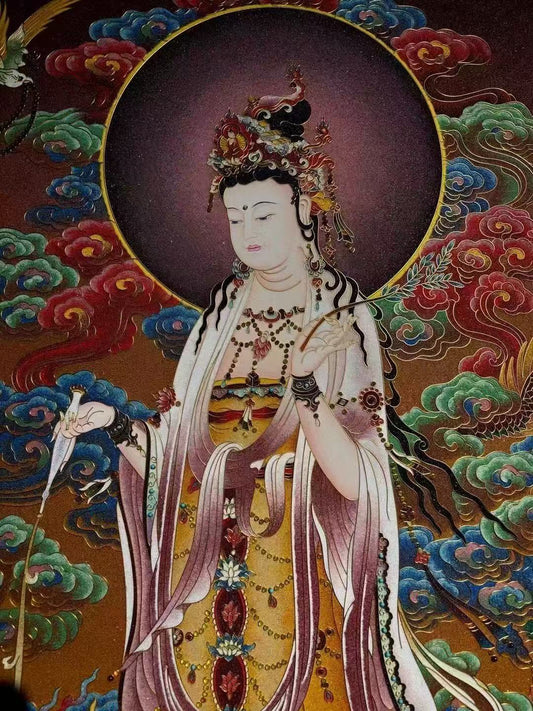

Green Tara in Rebgong Gemstone Thangka: Compassion in Action, Preserved in Mineral Color
In Tibetan Buddhist art, few figures are as immediately recognizable—or as deeply loved—as Green Tara. She is not only a symbol of compassion, but of compassion in action: the readiness to respond, protect, and guide without delay.
Within the broader tradition of Himalayan Thangka painting, Green Tara appears in many artistic forms. On ThangkaMarket, you can explore the full Green Tara Thangka collection, which reflects how different regions, styles, and scales interpret her enduring presence.
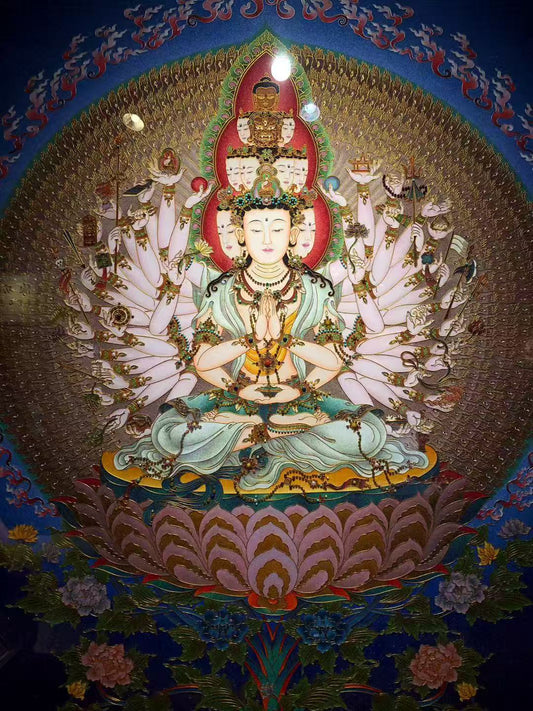
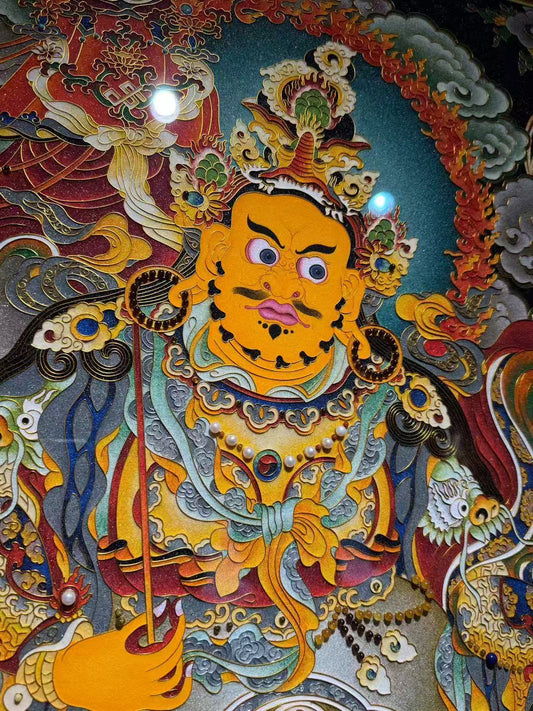
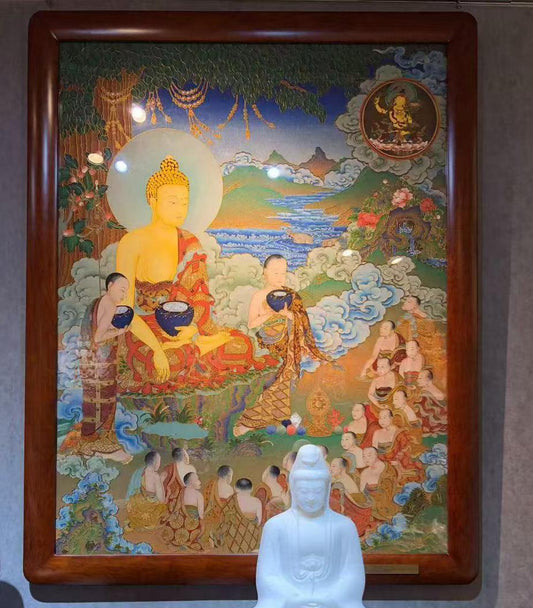
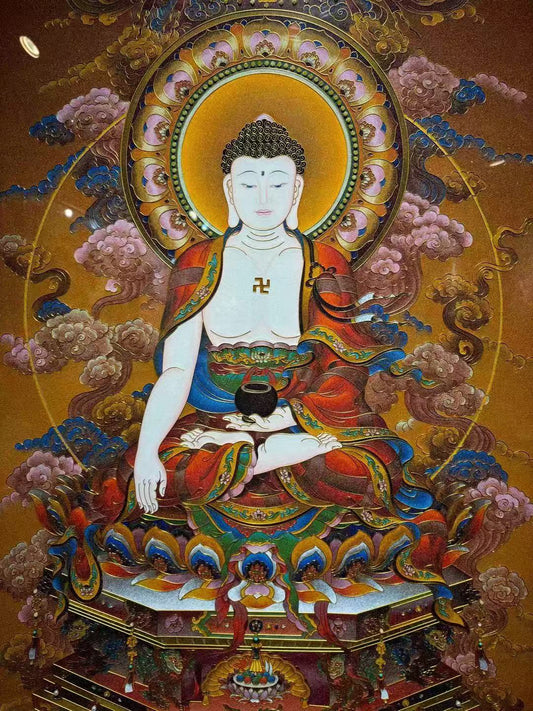
When Green Tara is rendered through the Rebgong (Regong Art) gemstone Thangka tradition, her meaning is carried not only by iconography, but by material, color, and scale. A large-scale, hand-painted gemstone Thangka is not merely an image—it is a cultural statement, a meditative presence, and a work of enduring Himalayan artistry.
Green Tara: The Bodhisattva Who Responds
Green Tara, known in Tibetan as Sgrol-ma, occupies a unique place in Tibetan Buddhism. Unlike many enlightened figures who embody stillness, Green Tara is defined by movement and readiness.
Her most iconic feature—the right leg extended forward—symbolizes her willingness to rise instantly to help sentient beings. This posture expresses protection from fear, compassion expressed through action, and support during moments of transition.
If you would like a deeper understanding of Green Tara’s origins, symbolism, and role within Tibetan Buddhism, we have prepared a detailed guide in our Learning Center:
👉 Green Tara: Meaning, Iconography, and Cultural Significance
This broader context helps explain why Green Tara has remained one of the most widely venerated figures across Himalayan regions for centuries.
Why Rebgong Thangka Matters
Not all Tibetan Thangka are created in the same way. Rebgong Thangka, originating from the Amdo region of Tibet, is internationally recognized for its disciplined training system, intricate compositions, and strict adherence to traditional iconographic standards.
Artists trained in the Rebgong tradition undergo long apprenticeships, learning not only how to paint, but how to prepare materials, layer colors, and maintain symbolic accuracy. Every lotus petal, hand gesture, and proportional relationship follows established visual canons.
In large-format works, this discipline becomes especially visible. The complexity of floral landscapes, color harmony, and spatial balance reflects years—often decades—of accumulated skill.
The Significance of Gemstone Pigment Painting
One of the defining features of high-level Rebgong Thangka is the use of natural gemstone mineral pigments.
Traditionally, these pigments are made by washing, grinding, and refining materials such as lapis lazuli, malachite, cinnabar, turquoise, coral, and gold-based minerals. Unlike synthetic paints, gemstone pigments possess a natural luminosity and depth that cannot be replicated mechanically.
Beyond their visual qualities, these materials reflect a cultural principle deeply embedded in Tibetan Buddhist art: sacred subjects deserve the most respectful materials available.
100% Hand-Painted: Why Authenticity Matters
In today’s global market, many artworks labeled as “Thangka” are partially printed or digitally reproduced, with minimal hand-finishing. While visually appealing, these works differ fundamentally from authentic Thangka painting.
A 100% hand-painted Rebgong gemstone Thangka is created entirely by hand—from the initial sketch to the final pigment layer. There are no pre-printed outlines, no digital bases, and no mechanical shortcuts.
This level of craftsmanship ensures not only artistic depth, but cultural integrity. Each line carries intention. Each color layer reflects accumulated experience. The result is an artwork that remains stable, expressive, and meaningful over time.
Scale and Presence: Why Size Matters
Large-format Thangka occupy a distinct category within Tibetan art. Their scale allows for greater compositional complexity, richer symbolic detail, and a stronger visual presence within a space.
A square-format 133 × 133 cm Green Tara Thangka is designed not for casual display, but for environments where contemplation, ritual, or collection is central—such as meditation halls, shrine rooms, temples, or spacious interiors.
Works of this scale are often commissioned rather than mass-produced, making them uncommon and highly valued.
Framing as Preservation: The Role of Pear Wood
For large-scale Thangka, presentation is part of preservation. A solid pear wood frame provides structural stability while maintaining visual restraint.
Pear wood is valued for its fine grain, durability, and understated warmth. It supports the artwork without distracting from it, allowing the gemstone pigments to remain the focal point while ensuring long-term protection and ease of display.
A Work Meant to Endure
A Green Tara Thangka painted in the Rebgong gemstone tradition is not created for trends or quick consumption. It is meant to endure—physically, visually, and culturally.
Such a work may serve as:
-
A focal point for meditation or prayer
-
A long-term collector’s piece
-
A cultural artwork passed across generations
For those interested in this specific large-scale work, you can view the full details of the artwork here:
👉 Green Tara Tibetan Thangka Painting – Rebgong Gemstone Masterpiece (133 × 133 cm)
Final Reflection
To encounter Green Tara through a monumental, 100% hand-painted Rebgong gemstone Thangka is to experience Tibetan Buddhist art at its most complete—where meaning, material, and mastery converge.
This is not merely an image of protection and peace. It is a living expression of Himalayan tradition, preserved in mineral color and human skill.
Previous
Shakyamuni Buddha: Wisdom, Awakening, and the Art of Rebgong Gemstone Thangka
Next
Shakyamuni Buddha Enlightenment Under the Bodhi Tree: Wisdom, Teaching, and the Rebgong Gemstone Thangka Tradition