
Dragon-Riding Avalokiteshvara: Compassion, Protection, and the Art of Rebgong Gemstone Thangka
Across centuries of Buddhist art, few images feel as calm and powerful as Avalokiteshvara, the Bodhisattva of Compassion. Known in China as Guanyin, this figure appears in many forms, each shaped by cultural memory, artistic tradition, and human longing for peace.
Among these forms, Dragon-Riding Avalokiteshvara, also called Nanhai Guanyin, stands out as a deeply symbolic image—one that bridges mythology, history, and visual art. When rendered through the rare and demanding Rebgong gemstone thangka tradition, the image becomes not only devotional, but also a work of enduring cultural craftsmanship.
The Meaning of Dragon-Riding Guanyin
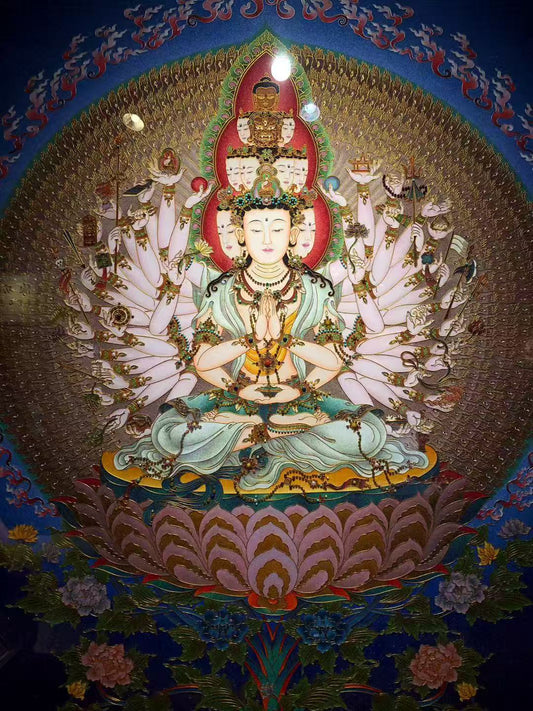
Dragon-Riding Guanyin is one of the Thirty-Three Manifestations of Avalokiteshvara described in Buddhist tradition. Unlike seated or meditative forms, this depiction presents Guanyin standing above ocean waves, riding or emerging from the head of a dragon.
In East Asian cultural imagination, the dragon does not symbolize danger. Instead, it represents balance, wisdom, rain, and harmony with natural forces. When Guanyin appears riding a dragon across the sea, the image expresses a clear message:
compassion actively entering the human world.
Legends tell of times when coastal regions suffered from plague, storms, or imbalance. Guanyin’s appearance upon the dragon symbolized the calming of chaos, the restoration of order, and protection of ordinary people. The dragon becomes not a beast to conquer, but a force guided by compassion.
Visually, this form carries strong movement—waves, clouds, and flowing robes—while Guanyin herself remains serene. This contrast between motion and stillness is one of the reasons the image has remained so compelling across generations.
From Early Buddhism to the Feminine Guanyin
Historically, Avalokiteshvara entered China with Buddhism during the late Western Han period. Early depictions show a male bodhisattva, often with a mustache, similar to figures seen in Gandhara and early Dunhuang murals.
Over time, especially from the Northern Wei through the Tang and Song dynasties, Avalokiteshvara gradually transformed into the graceful female Guanyin most people recognize today. This shift reflected both artistic evolution and cultural resonance. Compassion, mercy, and emotional sensitivity found a natural expression through a feminine form.
By the Song dynasty, Guanyin’s image stabilized into the elegant figure holding a pure vase and willow branch—symbols of healing, renewal, and gentle strength. Dragon-Riding Guanyin belongs to this mature phase, where visual refinement meets layered symbolism.
Rebgong: A Center of Thangka Art
To fully understand this artwork, it is essential to understand Rebgong.
Located in the Amdo region of the Tibetan Plateau (modern-day Qinghai), Rebgong is internationally recognized as one of the most important centers of traditional thangka painting. UNESCO has acknowledged Rebgong art as an Intangible Cultural Heritage, not because of scale or popularity, but because of its strict preservation of traditional techniques.
Rebgong artists follow a disciplined training system, often beginning in childhood. Proportions, iconography, pigments, and brushwork are all governed by long-established standards. Innovation exists, but always within respect for tradition.
What sets Rebgong thangka apart is not ornamentation, but precision, material authenticity, and spiritual restraint.
What Is a Gemstone Thangka?
A Gemstone Thangka does not mean that gemstones are glued onto the surface. Instead, it refers to a traditional painting method that uses mineral pigments ground from natural gemstones and precious minerals.
These pigments are created through a painstaking process:
-
Minerals such as lapis lazuli, malachite, cinnabar, and others are cleaned, ground, washed, and refined
-
The resulting pigments are layered slowly, sometimes over months
-
Each layer builds depth, luminosity, and stability
Unlike modern synthetic paints, mineral pigments do not fade easily over time. Many centuries-old thangkas still retain their brilliance today, a testament to both material quality and technique.
In Rebgong gemstone thangka, color is not decoration—it is structure.
Why Gemstone Pigments Matter for This Image
The image of Dragon-Riding Guanyin relies heavily on color balance:
-
Deep blues and greens express ocean and sky
-
Warm reds and gold tones convey vitality and protection
-
Subtle shading in the face preserves Guanyin’s calm expression amid movement
Gemstone pigments allow these contrasts to coexist without visual conflict. The dragon remains powerful but not aggressive. The waves feel dynamic but not chaotic. Guanyin’s presence anchors the entire composition.
This harmony is one reason gemstone thangkas are often described as having a “quiet strength” rather than visual excess.
Cultural Associations and Zodiac Symbolism
In traditional cultural belief systems, Avalokiteshvara is also regarded as a symbolic guardian figure associated with certain zodiac and astrological signs.
Dragon-Riding Guanyin is traditionally connected with:
-
Rat in the Chinese Zodiac
-
Cancer and Capricorn in Western astrology
These associations are symbolic rather than predictive, reflecting shared qualities such as compassion, emotional depth, resilience, and quiet inner strength. For many people, these connections add a personal layer of meaning without turning the artwork into superstition.
Art as Presence, Not Promise
One of the most important aspects of traditional Buddhist art is what it does not claim to do.
A thangka is not a tool that promises miracles. It does not guarantee outcomes. Instead, it functions as:
-
A visual focus for reflection
-
A reminder of values such as compassion and balance
-
A cultural object carrying centuries of artistic memory
When placed in a living space, meditation room, or study, a large framed thangka becomes part of daily life—not as decoration alone, but as a quiet presence.
A Contemporary Rebgong Masterpiece
Today, large-format framed gemstone thangkas are increasingly rare. The time, materials, and skill required mean that such works are created slowly and in limited numbers.
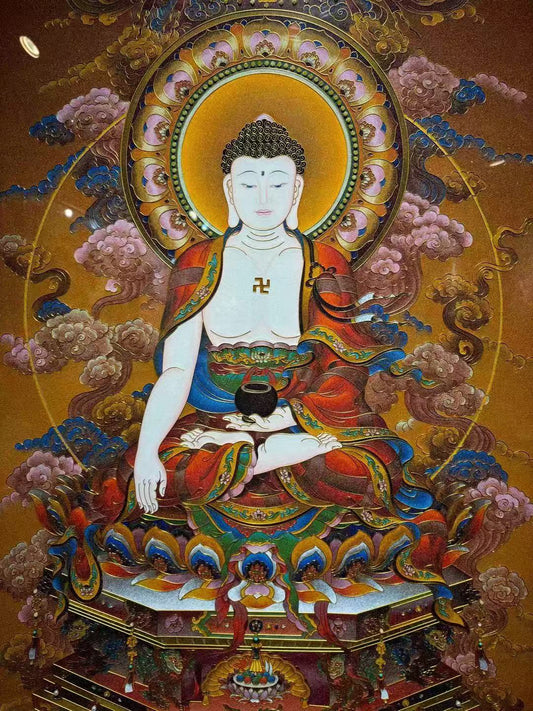
This Dragon-Riding Avalokiteshvara Rebgong Gemstone Thangka, with a painting size of 123 × 83 cm and framed in solid rosewood (Huali wood), represents the continuation of this lineage into the present.
For those interested in seeing the artwork in detail, the full piece can be viewed here:
👉 https://thangkamarket.com/collections/shop-thangka/products/dragon-riding-avalokiteshvara-nanhai-guanyin-rebgong-gemstone-thangka-hand-painted-with-natural-mineral-pigments-rosewood-frame-123-83-cm
Choosing Cultural Art with Intention
In a world filled with mass-produced décor, traditional thangka art offers something different: time, intention, and continuity.
Whether approached as a collector’s piece, a cultural artwork, or a contemplative presence, a Rebgong gemstone thangka carries more than imagery. It carries the accumulated knowledge of generations of artists who believed that materials, discipline, and respect matter.
Dragon-Riding Guanyin reminds us that compassion is not passive. Like the dragon crossing the sea, it moves toward the world—calmly, steadily, and without fear.