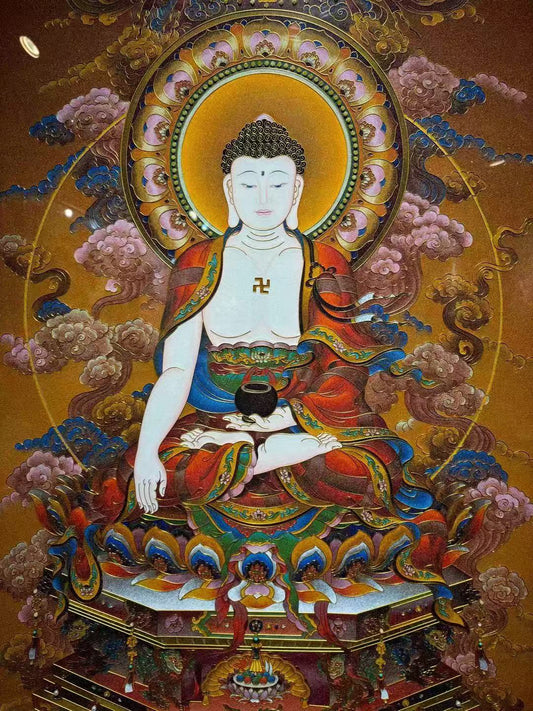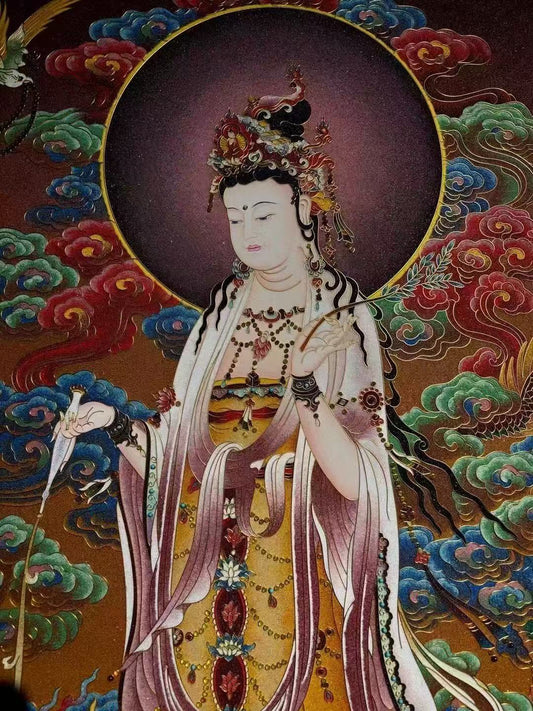

Water Moon Avalokiteshvara: Where Compassion, Art, and Stillness Meet
Among the many manifestations of Avalokiteshvara in Buddhist art, Water Moon Avalokiteshvara (Shuiyue Guanyin) occupies a unique and deeply poetic place. Unlike more formal and hieratic representations, this form presents compassion not as distant transcendence, but as a calm, attentive presence—one that quietly observes the world and responds with clarity and care.
Rendered through centuries of artistic evolution, Water Moon Avalokiteshvara embodies a meeting point between Mahayana Buddhist philosophy, Chinese aesthetic sensibility, and Himalayan artistic discipline. When expressed through the refined craftsmanship of Rebgong gemstone pigment thangka painting, this image becomes both a contemplative focus and a work of lasting cultural value.
Who Is Water Moon Avalokiteshvara?
Water Moon Avalokiteshvara, known in Chinese as Shuiyue Guanyin , is one of the Thirty-Three Manifestations of Avalokiteshvara described in Mahayana Buddhist tradition. This form is closely associated with the imagery found in texts such as the Avataṃsaka Sūtra (Huayan Sutra), which describes Avalokiteshvara dwelling on Mount Potalaka, beside a pool in which the moon is reflected.
The image of the moon reflected in water carries profound symbolic meaning. It suggests clarity without grasping, presence without attachment, and compassion that responds without force. In both Buddhist philosophy and Chinese cultural thought, “water moon” imagery evokes impermanence, insight, and quiet awareness.
For readers seeking a broader understanding of Avalokiteshvara’s origins and evolution across cultures, this in-depth guide provides valuable background:
👉 https://thangkamarket.com/blogs/learning-center/avalokiteshvara-chenrezig
A Distinctive Iconography: Freedom Within Discipline
What sets Water Moon Avalokiteshvara apart visually is its departure from rigid frontal symmetry. Instead of standing upright or seated in full lotus, the bodhisattva appears in a relaxed royal-ease (lalitasana) posture:
-
One leg bent, the other resting lightly upon a lotus
-
The body’s weight gently shifting to one side
-
One hand raised with subtle movement, the other providing support
This posture conveys a sense of ease, attentiveness, and accessibility. The bodhisattva is not removed from the world, but calmly present within it.
Despite this relaxed appearance, the image remains fully grounded in Buddhist iconographic discipline. The proportions, hand gestures, and attributes adhere to established canonical standards, ensuring that freedom of expression never compromises symbolic integrity.
Historical Roots: From Tang Painting to Song Sculpture
The Water Moon Avalokiteshvara image can be traced back to the Tang dynasty, particularly to the influential painter Zhou Fang, who pioneered a style that combined Buddhist subject matter with refined courtly elegance. His compositions laid the foundation for later developments in both painting and sculpture.
During the Song and Yuan dynasties, devotion to Water Moon Avalokiteshvara became especially widespread. Wooden sculptures of this form flourished, reflecting both technical mastery and a growing preference for contemplative, humanized religious imagery.
Many historic examples are now preserved in major institutions, including:
-
A Song dynasty wooden sculpture in the British Museum
-
A Liao dynasty full-wood carving in the Nelson-Atkins Museum of Art
These works testify to the enduring cultural significance of Water Moon Avalokiteshvara across centuries.
Avalokiteshvara and the Western Pure Land
In Mahayana Buddhism, Avalokiteshvara is revered as the Bodhisattva of Great Compassion (Mahākaruṇā). Within Pure Land Buddhism, Avalokiteshvara serves as the left attendant of Amitabha Buddha, together with Mahasthamaprapta Bodhisattva as the right attendant. Together, they are known as the Three Saints of the Western Pure Land.
Water Moon Avalokiteshvara emphasizes a particular dimension of this compassion—one rooted in stillness, observation, and responsiveness. Rather than dramatic action, this form highlights the quiet strength of awareness, making it especially resonant in contemplative practice.
Rebgong Thangka: A Tradition of Discipline and Depth
While Water Moon Avalokiteshvara originated in East Asia, its expression through Rebgong (Regong Art) thangka painting represents a remarkable cultural synthesis.
The Rebgong tradition, originating in the Amdo region, is renowned for:
-
Precise iconographic accuracy
-
Balanced and harmonious composition
-
Refined line work
-
A calm, dignified aesthetic
Unlike more decorative or ornamental styles, Rebgong thangkas emphasize clarity and structure, making them particularly well suited for complex figures like Water Moon Avalokiteshvara. This disciplined approach allows viewers to engage deeply with both form and meaning.
The Role of Gemstone Pigment in Sacred Art
One of the defining features of high-quality traditional thangka painting is the use of natural gemstone-based mineral pigments. These pigments are prepared through meticulous processes of washing, grinding, and blending, using materials such as:
-
Lapis lazuli for deep blues
-
Malachite for greens
-
Cinnabar for reds
-
Gold, silver, turquoise, coral, and pearl
Unlike synthetic colors, gemstone pigments offer exceptional luminosity and long-term stability. Their use reflects not only technical expertise, but also reverence for the sacred subject.
In the context of Water Moon Avalokiteshvara, these pigments enhance the painting’s serene atmosphere—allowing subtle tonal transitions, depth, and clarity that endure for generations.
A Contemporary Masterpiece: Water Moon Avalokiteshvara Thangka
A striking contemporary expression of this tradition is the Water Moon Avalokiteshvara Rebgong Gemstone Pigment Thangka, fully hand-painted and framed in solid pear wood.
With a painting size of 134 × 134 cm, this large-format work offers a commanding yet tranquil presence. Its square composition reinforces visual balance, while the gemstone pigments bring depth and quiet radiance to the figure.
You can view the complete details of this artwork here:
👉 https://thangkamarket.com/collections/shop-thangka/products/water-moon-avalokiteshvara-shuiyue-guanyin-rebgong-gemstone-pigment-thangka-hand-painted-pear-wood-frame-134-134-cm
Zodiac and Cultural Associations
Within traditional cultural symbolism, Avalokiteshvara (Guanyin) is often associated with compassionate guardianship. Water Moon Avalokiteshvara is traditionally linked with:
-
Chinese Zodiac: Rat
-
Western Horoscope: Cancer and Capricorn
These associations emphasize qualities such as emotional sensitivity, resilience, responsibility, and inner strength. Rather than implying guaranteed outcomes, they offer a symbolic framework through which individuals may find personal resonance with the artwork.
Who Is This Artwork For?
This Water Moon Avalokiteshvara thangka may be especially meaningful for:
-
Individuals seeking a contemplative focal point
-
Collectors of authentic Himalayan and East Asian Buddhist art
-
Cultural enthusiasts interested in Buddhist iconography
-
Those drawn to compassion expressed through stillness rather than spectacle
It is designed for long-term appreciation, not temporary decoration.
Exploring the Avalokiteshvara Collection
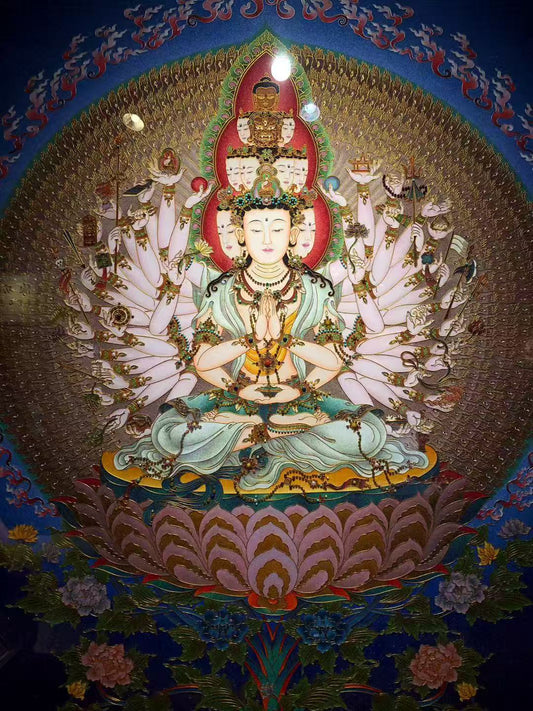
Water Moon Avalokiteshvara is one expression within a rich and diverse tradition. Other forms—such as Thousand-Armed Avalokiteshvara or peaceful seated Chenrezig—offer different visual languages for the same core value: compassion.
You may explore the complete Avalokiteshvara (Chenrezig) thangka collection here:
👉 https://thangkamarket.com/collections/shop-thangka-by-deity-avalokiteshvara-chenrezig
Art as Quiet Guidance
In an age of constant movement and distraction, images like Water Moon Avalokiteshvara remind us of another way of being—one grounded in observation, patience, and care. Through disciplined craftsmanship, natural materials, and centuries of accumulated meaning, this form continues to speak across cultures and time.
A thangka is not merely something to look at. It is something to return to.