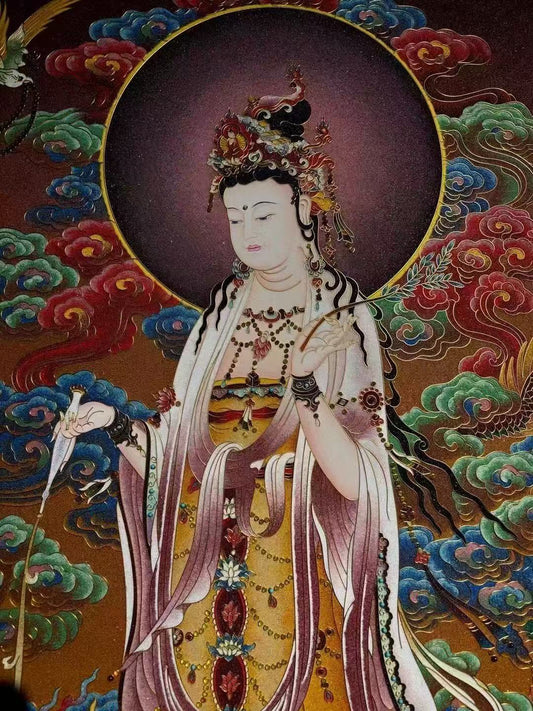

Shakyamuni Buddha Enlightenment Under the Bodhi Tree: Wisdom, Teaching, and the Rebgong Gemstone Thangka Tradition
Among all Buddhist images, few scenes carry as much spiritual and historical weight as Shakyamuni Buddha beneath the Bodhi tree. It is here, according to Buddhist tradition, that Siddhartha Gautama attained supreme enlightenment, realizing the nature of suffering, impermanence, and liberation. From this awakening arose the teachings that would later spread across Asia and shape centuries of philosophy, art, and contemplative practice.
In Himalayan Buddhist art, this pivotal moment is often depicted not as a solitary act of meditation, but as the beginning of teaching and transmission—the Buddha sharing insight with disciples for the benefit of all beings. One of the most refined expressions of this theme can be found in large-format Rebgong gemstone thangka paintings, where narrative depth, symbolism, and craftsmanship converge.
This article explores the meaning of Shakyamuni Buddha’s enlightenment under the Bodhi tree, the symbolism of teaching scenes in thangka art, and how the Rebgong gemstone-pigment tradition preserves this legacy in visual form.
Shakyamuni Buddha and the Moment of Enlightenment
Shakyamuni Buddha, the historical Buddha, was born as Prince Siddhartha Gautama. After renouncing royal life and years of ascetic practice, he sat beneath the Bodhi tree in deep meditation. Through unwavering concentration and insight, he attained Anuttara Samyak Sambodhi—unsurpassed, complete awakening.
This moment represents more than personal realization. In Buddhist understanding, enlightenment is inseparable from compassion. Having awakened, the Buddha chose not to remain in silence, but to teach the Dharma, offering guidance to others seeking liberation from suffering.
If you would like to explore the life, symbolism, and iconography of Shakyamuni Buddha in more detail, you can read our in-depth introduction here:
👉 Shakyamuni Buddha: History, Meaning, and Symbolism
https://thangkamarket.com/blogs/learning-center/shakyamuni-buddha
Teaching Under the Bodhi Tree in Thangka Art
In thangka paintings, scenes of Shakyamuni Buddha teaching beneath the Bodhi tree often include monks and disciples gathered attentively around him. This composition conveys several layers of meaning:
-
Wisdom transmitted through teaching, not kept for oneself
-
The relationship between teacher and student, central to Buddhist learning
-
The continuity of the Dharma, passed from generation to generation
Unlike images focused solely on meditation or nirvana, teaching scenes emphasize study, reflection, and compassionate action. For this reason, such thangkas are traditionally associated with libraries, study rooms, meditation halls, and spaces dedicated to learning.
From an artistic perspective, teaching scenes allow painters to express narrative richness—multiple figures, landscapes, clouds, trees, and symbolic elements—while maintaining balance and spiritual calm.
The Rebgong Tradition: A Living Lineage of Himalayan Art
The Rebgong (Regong) region, located in Amdo (modern-day Qinghai), is one of the most respected centers of Tibetan Buddhist art. Recognized by UNESCO as an Intangible Cultural Heritage, Rebgong thangka painting is known for its disciplined line work, narrative clarity, and refined use of color.
What distinguishes Rebgong thangkas is their ability to balance devotional integrity with artistic sophistication. Figures are serene and dignified, compositions are structured yet fluid, and every element—from facial expressions to landscape details—serves the overall spiritual message.
Large-format Rebgong thangkas, especially those depicting key moments such as the Buddha’s enlightenment and teaching, are often regarded as collectible, museum-grade artworks rather than simple decorative pieces.
Gemstone Mineral Pigments: Color That Endures
A defining feature of traditional Rebgong thangka painting is the use of natural gemstone-based mineral pigments.
Rather than synthetic colors, artisans prepare pigments by hand from finely ground natural materials, including:
-
Gold and silver minerals
-
Lapis lazuli for deep blues
-
Malachite for rich greens
-
Cinnabar for reds
-
Turquoise, coral, and pearl minerals for delicate detailing
These pigments undergo careful washing, grinding, and blending before being applied layer by layer. The result is color that is luminous, saturated, and remarkably stable, resisting fading even over generations.
In Buddhist art, color is never purely decorative. Blue symbolizes wisdom, red vitality and transformative power, green compassion and activity, and gold the awakened nature itself. Gemstone pigments enhance not only visual depth, but also symbolic resonance.
A Masterpiece Example: Shakyamuni Buddha Enlightenment and Teaching Under the Bodhi Tree
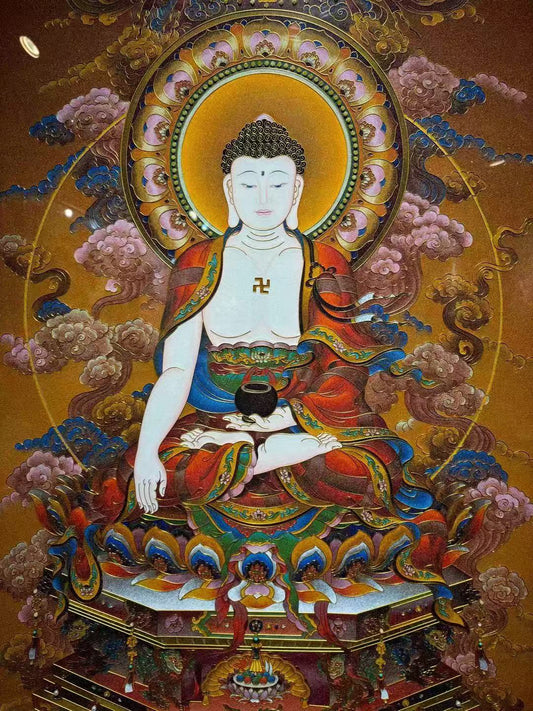
A refined example of this tradition can be seen in the Shakyamuni Buddha Enlightenment and Teaching Under the Bodhi Tree Rebgong Gemstone Thangka, a large hand-painted work measuring 128 × 75 cm and finished with a solid pearwood frame.
This piece presents the Buddha seated beneath the Bodhi tree, surrounded by disciples in attentive listening. The balanced composition, luminous gemstone pigments, and layered landscape create a sense of calm authority—wisdom shared with compassion.
You can view the artwork in full detail here:
👉 Shakyamuni Buddha Enlightenment and Teaching Under the Bodhi Tree Rebgong Gemstone Thangka
https://thangkamarket.com/collections/shop-thangka/products/shakyamuni-buddha-enlightenment-and-teaching-under-the-bodhi-tree-rebgong-gemstone-thangka-hand-painted-with-natural-mineral-pigments-pearwood-frame-128-75-cm
The pearwood frame adds warmth and structural stability, transforming the thangka into a framed wall-hanging artwork suitable for permanent display in meditation rooms, study spaces, or refined interiors.
Symbolic Resonance: Wisdom, Study, and Pisces
Beyond its historical and artistic meaning, Shakyamuni Buddha is also regarded in some cultural interpretations as the guardian Buddha associated with Pisces. Pisces is often linked with compassion, empathy, and spiritual sensitivity—qualities that resonate deeply with the Buddha’s path of awakening and teaching.
For those who identify with Pisces, a thangka depicting Shakyamuni Buddha’s enlightenment and teaching can hold an additional layer of symbolic connection, representing wisdom guided by compassion rather than authority.
Importantly, this symbolism is not presented as fortune-telling or promise, but as a cultural and contemplative association, enriching the artwork’s meaning for modern viewers.
Choosing a Shakyamuni Buddha Thangka
When selecting a Shakyamuni Buddha thangka, especially for study or meditation spaces, several factors are worth considering:
-
Scene and posture: Teaching scenes emphasize learning and transmission
-
Artistic lineage: Rebgong works reflect a highly respected tradition
-
Materials: Natural gemstone pigments ensure longevity and depth
-
Scale and framing: Large framed thangkas function as central wall art
For those interested in exploring more works dedicated to the historical Buddha, you can browse our full Shakyamuni Buddha collection here:
👉 Shakyamuni Buddha Thangka Collection
https://thangkamarket.com/collections/shop-thangka-by-deity
A Living Tradition for Contemporary Spaces
Thangka painting is not a relic of the past. When created with integrity and understanding, it remains a living tradition—one that speaks to modern seekers, collectors, and lovers of Himalayan art.
A Shakyamuni Buddha thangka depicting enlightenment and teaching under the Bodhi tree is more than an image. It is a visual reminder of wisdom shared, compassion practiced, and insight cultivated through study and reflection.
Whether placed in a meditation room, a library, or a quiet living space, such an artwork invites stillness and thoughtful presence—qualities as relevant today as they were over two thousand years ago.
Previous
Green Tara in Rebgong Gemstone Thangka: Compassion in Action, Preserved in Mineral Color
Next
Vaishravana Thangka: The Wealth Guardian King in Tibetan Buddhist Art