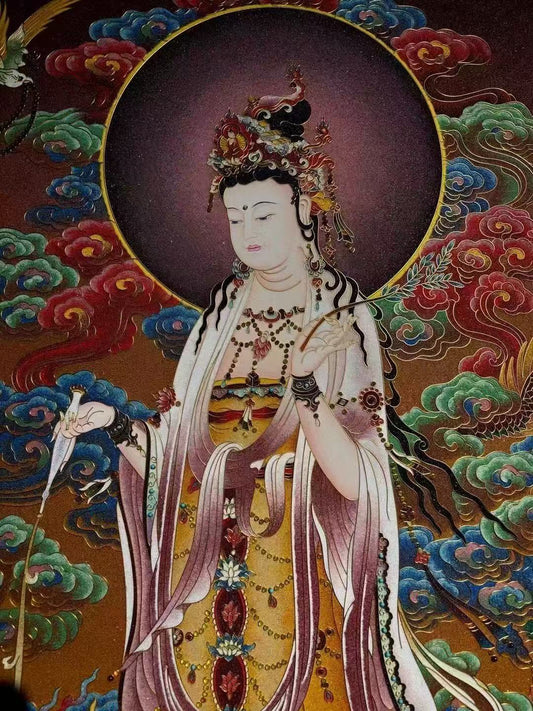

Thousand-Armed Avalokiteshvara: Compassion Expressed Through Himalayan Thangka Art
Among the many sacred images in Himalayan Buddhist art, Thousand-Armed, Thousand-Eyed Avalokiteshvara stands as one of the most profound visual expressions of compassion. Known as Chenrezig in Tibetan Buddhism and Guanyin in East Asian traditions, this bodhisattva represents the ideal of responding to suffering with limitless empathy and wisdom.
Through centuries of artistic transmission, this form has become both a devotional focus and a cultural symbol—especially within the refined tradition of Rebgong thangka painting.
What Is Thousand-Armed Avalokiteshvara?
In Buddhist symbolism, numbers are rarely literal. The word “thousand” signifies limitlessness and completeness.
-
A thousand hands represent boundless compassionate action
-
A thousand eyes symbolize complete awareness and insight
Each hand extends help.
Each eye perceives suffering clearly.
According to traditional Dhāraṇī Sūtras, Thousand-Armed Avalokiteshvara responds to beings according to their individual capacities, manifesting different methods to guide and support them toward clarity and liberation.
Avalokiteshvara and the Western Pure Land Tradition
In Mahayana and Pure Land Buddhism, Avalokiteshvara holds a central role.
Together with Amitabha Buddha and Mahasthamaprapta Bodhisattva, Avalokiteshvara forms the Three Saints of the Western Pure Land, serving as the left attendant of Amitabha.
This position emphasizes compassion as an active force—bridging wisdom and lived human experience. Rather than promising supernatural intervention, Avalokiteshvara represents ethical action, patience, and resilience.
For a deeper exploration of Avalokiteshvara’s cultural and historical background, you may read this guide:
👉 https://thangkamarket.com/blogs/learning-center/avalokiteshvara-chenrezig
Why Rebgong Thangka Is Highly Valued
Not all Tibetan thangkas follow the same artistic lineage.
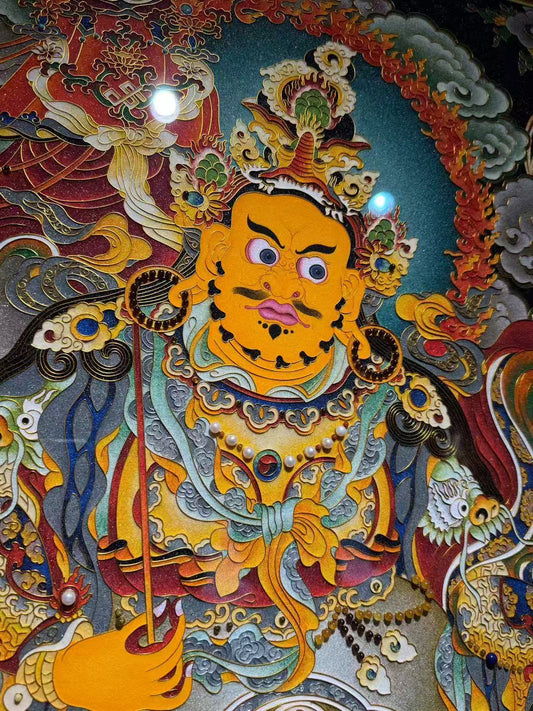
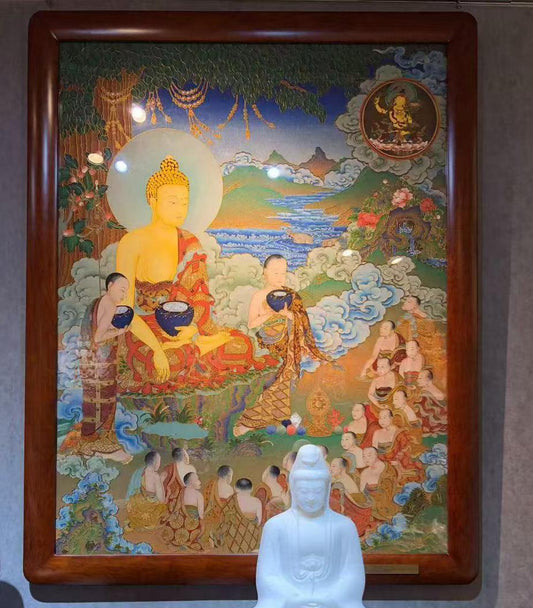
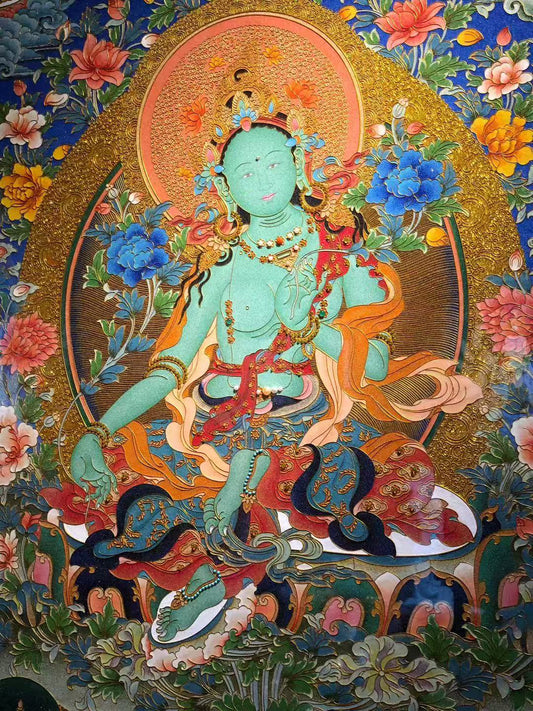
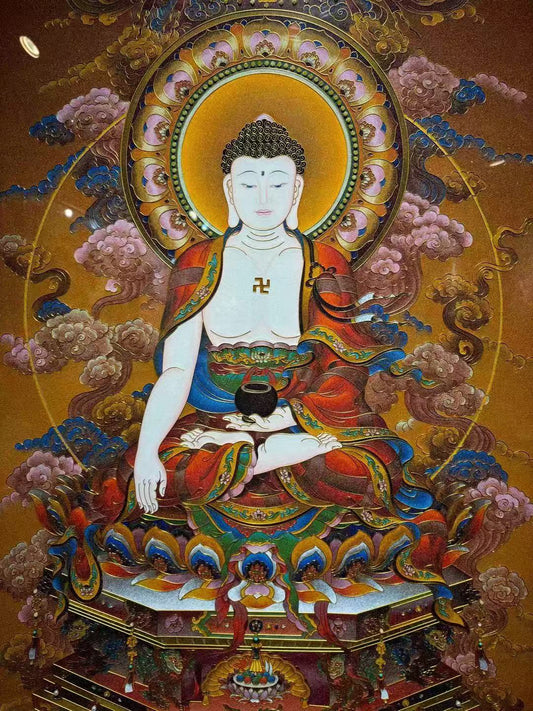
The Rebgong (Regong Art) tradition, originating in the Amdo region, is recognized for its disciplined craftsmanship and iconographic precision.
Rebgong thangkas are valued for:
-
Strict adherence to traditional proportions
-
Refined and confident line work
-
Balanced, dignified compositions
-
Harmonious yet powerful color structure
This tradition emphasizes both artistic mastery and spiritual integrity, making Rebgong thangkas highly regarded by collectors and practitioners alike.
Gemstone Pigment Thangka: More Than Color
Traditional thangka painting often uses natural gemstone-based mineral pigments, prepared through a labor-intensive process.
Common materials include:
-
Gold and silver
-
Lapis lazuli for deep blues
-
Malachite for greens
-
Cinnabar for reds
-
Turquoise, coral, and pearl
Each pigment is washed, ground, and blended by hand.
Compared to synthetic pigments, gemstone pigments offer greater depth, luminosity, and long-term stability, allowing colors to remain vibrant for generations.
This practice reflects reverence for the sacred subject and reinforces the symbolic language of color in Himalayan Buddhist cosmology.
Rebgong Thangka vs Other Tibetan Styles
While Lhasa and Nepalese thangkas often emphasize decorative richness or Newar aesthetics, Rebgong thangkas are known for:
-
Visual clarity over ornamentation
-
Calm, contemplative presence
-
Strong structural balance
For complex subjects such as Thousand-Armed Avalokiteshvara, this clarity allows viewers to engage deeply with the iconography without visual overload.
A Contemporary Masterpiece of Compassion
A notable example of this tradition is the Thousand-Armed, Eleven-Faced Avalokiteshvara Rebgong Thangka, fully hand-painted with gemstone mineral pigments and framed in solid pear wood.
With a painting size of 122 × 99 cm, this large-format artwork is suitable for meditation spaces, shrine rooms, or serious art collections.
You can view the complete details here:
👉 https://thangkamarket.com/products/thousand-armed-avalokiteshvara-eleven-faced-chenrezig-rebgong-gemstone-pigment-thangka-hand-painted-pear-wood-frame-122-99-cm
Who Is This Thangka For?
This artwork may be especially meaningful for:
-
Practitioners seeking a contemplative focal point
-
Collectors of authentic Himalayan Buddhist art
-
Cultural enthusiasts interested in Rebgong craftsmanship
-
Those drawn to Avalokiteshvara as a symbol of compassion
It is designed for long-term appreciation rather than temporary decoration.
Explore More Avalokiteshvara Thangkas
Thousand-Armed Avalokiteshvara is part of a wider visual tradition.
Different forms express compassion through varied iconography and artistic language.
Explore the complete Avalokiteshvara (Chenrezig) collection here:
👉 https://thangkamarket.com/collections/shop-thangka-by-deity-avalokiteshvara-chenrezig
Frequently Asked Questions
Is this an original hand-painted thangka?
Yes. Each Rebgong thangka is entirely hand-painted following traditional methods. No printing or digital reproduction is involved.
Do gemstone pigments fade over time?
When properly prepared and preserved, natural gemstone pigments are known for their exceptional durability and color stability.
Is this suitable for meditation or collection?
Yes. This artwork is suitable for contemplative spaces, shrine rooms, and long-term art collection.
Art as a Path of Reflection
A thangka is more than an image—it is a visual expression of values cultivated over centuries.
Through form, color, and symbolism, Thousand-Armed Avalokiteshvara continues to communicate compassion and clarity across cultures and generations.
Previous
Vaishravana Thangka: The Wealth Guardian King in Tibetan Buddhist Art
Next
Water Moon Avalokiteshvara: Where Compassion, Art, and Stillness Meet