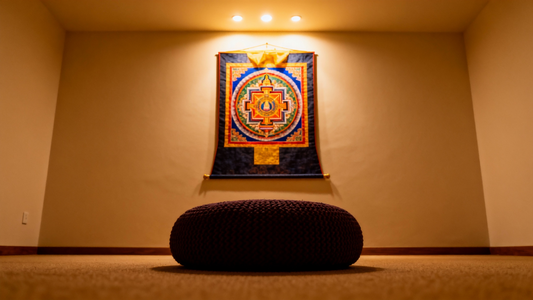

The Five Dhyani Buddhas: Wisdom, Symbolism, and Their Role in Himalayan Buddhist Art
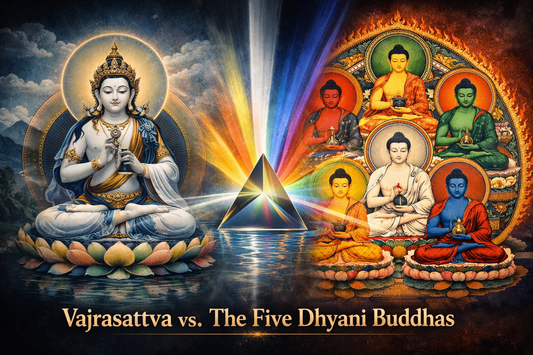
The Five Dhyani Buddhas, also known as the Five Wisdom Buddhas, are central figures in Vajrayana Buddhism.
They represent five aspects of enlightened consciousness and the transformation of the “five poisons” — ignorance, anger, pride, desire, and jealousy — into profound spiritual wisdom.
In Himalayan culture, these Buddhas are foundational to Thangka painting, mandala rituals, and meditation practices.
This guide offers a complete, easy-to-understand overview for anyone interested in Buddhist art, symbolism, and spiritual study.
What Are the Five Dhyani Buddhas?
The Five Buddhas embody five universal wisdoms:
-
Vairochana — All-Illuminating Wisdom
-
Akshobhya — Mirror-like Wisdom
-
Ratnasambhava — Wisdom of Equality
-
Amitabha — Discriminating Wisdom
-
Amoghasiddhi — All-Accomplishing Wisdom
Each Buddha appears in a specific color, direction, gesture (mudra), and symbolic element.
Together, they form the cosmological structure of many Buddhist practices and artworks.
The Five Poisons and the Five Wisdoms
In Vajrayana teachings, human suffering comes from five basic mental afflictions.
The Five Buddhas represent the enlightened transformation of these emotions:
| Negative Emotion (Poison) | Transformed Wisdom | Buddha |
|---|---|---|
| Ignorance | Wisdom of Reality | Vairochana |
| Anger | Mirror-like Wisdom | Akshobhya |
| Pride | Wisdom of Equality | Ratnasambhava |
| Desire / Attachment | Discriminating Wisdom | Amitabha |
| Jealousy | All-Accomplishing Wisdom | Amoghasiddhi |
这一理念来源于你附件中关于五方佛“转化五毒、成为五智”的密教哲学核心,非常适合做科普内容。
The Five Wisdom Buddhas Explained
1. Vairochana — The Radiant Buddha of Universal Illumination
-
Color: White
-
Direction: Center
-
Mudra: Dharmachakra (Turning the Wheel of Dharma)
-
Symbol: Dharma Wheel
Vairochana represents the wisdom of the true nature of reality.
His white color symbolizes purity and the unification of all other colors — just as his wisdom unifies all other wisdoms.
He is associated with the transformation of ignorance into spiritual clarity.
2. Akshobhya — The Buddha of Mirror-Like Wisdom
-
Color: Blue
-
Direction: East
-
Mudra: Bhumisparsha (Earth-Touching Gesture)
-
Symbol: Vajra
-
Animal Symbol: Elephant
Akshobhya transforms anger into stillness, clarity, and unwavering strength — like a mirror that reflects reality without distortion.
His blue color connects him with the element of water and deep meditative concentration.
3. Ratnasambhava — The Buddha of Equality and Generosity
-
Color: Yellow
-
Direction: South
-
Mudra: Varada (Gesture of Giving)
-
Symbol: Jewel
-
Animal Symbol: Horse
Ratnasambhava embodies wealth, abundance, and generosity.
He transforms pride into the wisdom of equality, seeing all beings as equally precious.
The yellow color symbolizes richness and the radiant earth element.
4. Amitabha — The Buddha of Discriminating Wisdom
-
Color: Red
-
Direction: West
-
Mudra: Dhyana (Meditation Gesture)
-
Symbol: Lotus
-
Animal Symbol: Peacock
Amitabha transforms desire and attachment into the ability to recognize beauty and truth without clinging.
He is associated with compassion, meditation, and the Pure Land tradition.
His red color expresses warmth, love, and the transformative fire of awareness.
5. Amoghasiddhi — The Buddha of Accomplished Action
-
Color: Green
-
Direction: North
-
Mudra: Abhaya (Gesture of Fearlessness)
-
Symbol: Double Vajra
-
Animal Symbol: Garuda
Amoghasiddhi transforms jealousy into fearless, enlightened action.
He represents the ability to complete goals and overcome obstacles.
Green symbolizes active compassion and dynamic energy.
The Mandala Structure of the Five Buddhas
The Five Buddhas form a sacred geometric mandala:
-
Center: Vairochana
-
East: Akshobhya
-
South: Ratnasambhava
-
West: Amitabha
-
North: Amoghasiddhi
This arrangement reflects the Vajrayana understanding of the universe — balanced, interconnected, and spiritually charged.
The Five Buddha Families (Five Tathagata Families)
-
Buddha Family — Vairochana
-
Vajra Family — Akshobhya
-
Ratna Family — Ratnasambhava
-
Padma Family — Amitabha
-
Karma Family — Amoghasiddhi
Symbolism in Thangka Art
In Thangka art, the Five Buddhas are recognized through:
-
Color and halo
-
Hand gestures
-
Decorative elements
-
Facial expression and posture
-
Placement within the mandala
-
Their symbolic animals and sacred implements
These details help viewers understand the spiritual teachings embedded in the artwork.
👉 Related Collection: Five Dhyani Buddhas – ThangkaMarket
How Practitioners Use the Five Buddhas in Meditation
Common practices include:
-
Visualizing each Buddha’s color and light
-
Reciting their mantras or seed syllables
-
Meditating on the transformation of emotions
-
Using mandalas as focus points
-
Contemplating their symbolic gestures
👉 Learning Center: Learning Center – ThangkaMarket
Learn More About Each Deity
To deepen understanding, you may guide users:
👉 Main Deity Guide: Deity Encyclopedia – ThangkaMarket
FAQ — Five Dhyani Buddhas
1. Who are the Five Dhyani Buddhas?
They are symbolic Buddhas representing five aspects of enlightened wisdom in Vajrayana Buddhism.
2. Are the Five Dhyani Buddhas historical figures?
No. They are archetypal representations of wisdom, not historical individuals.
3. What do the colors of the Five Buddhas mean?
Each color symbolizes an element and a wisdom principle — white (purity), blue (clarity), yellow (abundance), red (compassion), and green (accomplishment).
4. What do the Five Buddhas represent spiritually?
They represent the transformation of negative emotions into wisdom and higher awareness.
5. How are they used in meditation?
Practitioners visualize the Buddhas, chant their mantras, and contemplate their symbolic qualities.
6. What is the Five-Buddha Mandala?
A sacred diagram showing the Buddhas arranged in five directions, representing cosmic order and spiritual balance.
7. Why are the Five Buddhas so common in Thangka art?
Because their forms express deep symbolic teachings that artists embed within sacred Buddhist paintings.
Conclusion
The Five Dhyani Buddhas offer a complete system of wisdom, meditation, and symbolic meaning in Vajrayana Buddhism.
Their presence in Himalayan art — especially in Thangka paintings — continues to inspire practitioners, collectors, and spiritual seekers around the world.
Whether you are exploring Buddhist philosophy or discovering traditional Himalayan art, the Five Buddhas provide a timeless doorway into deeper understanding and inner transformation.
Previous
21 Taras | The Ultimate Guide to the 21 Taras Meaning, Benefits, Mantras & Sacred Feminine Wisdom in Himalayan Buddhism
Next
Kalachakra Mandala Explained: Meaning, Structure, and Symbolism in Tibetan Thangka Art
Related articles
Long-term Preservation
Dec 14 2025