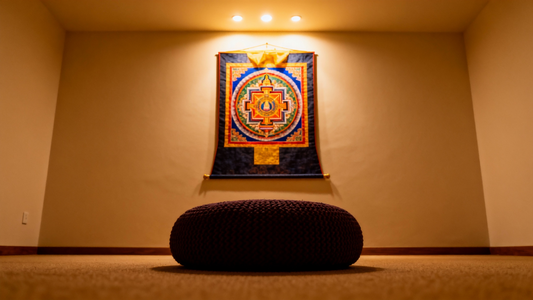

Hand-painted vs Printed Thangkas: Key Differences & Selection Guide
Hand-painted vs Printed Thangkas: Key Differences & Selection Guide
For those interested in Thangkas, distinguishing between hand-painted and printed works is the core of making an informed purchase. The two differ fundamentally in detail quality, durability, pigment selection, pricing, and spiritual significance—factors that directly determine their value and suitability for different needs (e.g., spiritual practice, collection, decoration). This article focuses on clarifying these key differences, supplemented by practical identification methods and targeted selection advice, helping you accurately distinguish the two and choose the right Thangka for yourself.
Pre-Purchase Basic Preparation: Clarify Core Needs First
Before delving into the differences between hand-painted and printed Thangkas, clarifying your core needs helps narrow down your choices more efficiently. Key needs to consider include:
• Spiritual Practice/Devotion: Requires works with spiritual significance and iconographic accuracy—hand-painted Thangkas are the only suitable option.
• Collection/Investment: Focus on long-term value and craftsmanship uniqueness—only hand-painted works have collection potential.
• Temporary Decoration: Pursue cost-effectiveness and aesthetic consistency with space—printed Thangkas can meet basic needs.
• Daily Wear: Prioritize portability and (optional) spiritual resonance—choose hand-painted mini pendants for spirituality, printed ones for fashion.
Thangkamarket:Mini Thangka & Pendants – ThangkaMarket
Core Differences: Hand-painted vs Printed Thangkas
Hand-painted and printed Thangkas differ drastically in five core dimensions. Understanding these differences is crucial to avoiding pitfalls and choosing the right work. Below is a detailed comparison:
1. Detail Quality: Artistic Expression vs Uniform Reproduction
• Hand-painted Thangkas: Details are infused with artistic expressiveness and natural variations. Linework (e.g., Rebgong’s ultra-fine silk-thread lines, Menri’s bold iron lines) has subtle thickness changes—thicker at deity outlines for solemnity, thinner at fabric folds for softness. Deity expressions are nuanced (e.g., Newar’s luminous smiles, Karma Gadri’s serene gazes), and decorative patterns (jewelry, robes) have unique hand-drawn details that vary slightly even in the same style. Close inspection reveals clear brush strokes and layered pigment application, adding depth to the work.
• Printed Thangkas: Details are mass-produced and uniformly repetitive. Lines are rigid, thin, and lack variation (often looking like "stamped" patterns); deity expressions are flat and lack emotional resonance; decorative elements (e.g., gold patterns, floral motifs) are identical across multiple copies. High-quality prints may mimic brush strokes, but magnification reveals pixelation or uniform ink distribution with no layered texture.
• Hand-painted Thangkas: Details are rendered with artistic expressiveness and subtle variations. Linework (e.g., Rebgong’s silk-thread lines, Menri’s iron lines) has natural thickness changes that convey texture and form; deity expressions have nuanced emotions (e.g., Newar’s luminous smiles, Karma Gadri’s serene gazes); decorative patterns (jewelry, robes) have unique hand-drawn details that vary slightly even in the same style. Close inspection reveals brush strokes and layered pigment application, adding depth to the work.
• Printed Thangkas: Details are mass-produced and uniformly repetitive. Lines are rigid, thin, and lack variation (often looking like "stamped" patterns); deity expressions are flat and lack emotional resonance; decorative elements (e.g., gold patterns, floral motifs) are identical across multiple copies. High-quality prints may mimic brush strokes, but magnification reveals pixelation or uniform ink distribution with no layered texture.
2. Durability: Long-lasting vs Fade-prone
• Hand-painted Thangkas: Made with natural mineral pigments (lapis lazuli, malachite, cinnabar) and plant-based pigments, which are resistant to fading and oxidation. When properly cared for (avoid direct sunlight, control humidity), genuine hand-painted Thangkas can retain their vibrancy for decades or even centuries—this is why antique Thangkas are valuable collectibles. The canvas, prepared with traditional techniques (animal glue, gypsum sizing), is sturdy and durable.
• Printed Thangkas: Use synthetic inks or low-quality chemical pigments, which are prone to fading, discoloration, and cracking. Even with proper care, most printed works fade significantly within 1-5 years, especially when exposed to light. The canvas is often low-grade cotton or paper, which may become brittle or warp over time. High-quality giclée prints (using archival inks) last longer but still cannot match the durability of mineral pigments.
• Hand-painted Thangkas: Made with natural mineral pigments (lapis lazuli, malachite, cinnabar) and plant-based pigments, which are resistant to fading and oxidation. When properly cared for (avoid direct sunlight, control humidity), genuine hand-painted Thangkas can retain their vibrancy for decades or even centuries—this is why antique Thangkas are valuable collectibles. The canvas, prepared with traditional techniques (animal glue, gypsum sizing), is sturdy and durable.
• Printed Thangkas: Use synthetic inks or low-quality chemical pigments, which are prone to fading, discoloration, and cracking. Even with proper care, most printed works fade significantly within 1-5 years, especially when exposed to light. The canvas is often low-grade cotton or paper, which may become brittle or warp over time. High-quality giclée prints (using archival inks) last longer but still cannot match the durability of mineral pigments.
3. Pigments: Natural & Luminous vs Synthetic & Flat
• Hand-painted Thangkas: Pigments are ground from natural minerals or plants, then mixed with animal glue for application. These pigments have a unique luminous quality—under light, they show subtle shimmer and layered shades (e.g., darker blue at the edges of lapis lazuli pigment, lighter blue in thinner layers). Gold details use genuine 24K gold leaf or gold powder, with a warm, radiant glow that synthetic gold cannot replicate.
• Printed Thangkas: Use synthetic inks (e.g., CMYK inks for digital printing) or chemical pigments. Colors look flat and lack depth—even "gold" details are printed with metallic ink, which has a cold, reflective sheen instead of the warm glow of genuine gold. Synthetic pigments may emit a slight chemical odor, while natural pigments have no strong smell.
• Hand-painted Thangkas: Pigments are ground from natural minerals or plants, then mixed with animal glue for application. These pigments have a unique luminous quality—under light, they show subtle shimmer and layered shades (e.g., darker blue at the edges of lapis lazuli pigment, lighter blue in thinner layers). Gold details use genuine 24K gold leaf or gold powder, with a warm, radiant glow that synthetic gold cannot replicate.
• Printed Thangkas: Use synthetic inks (e.g., CMYK inks for digital printing) or chemical pigments. Colors look flat and lack depth—even "gold" details are printed with metallic ink, which has a cold, reflective sheen instead of the warm glow of genuine gold. Synthetic pigments may emit a slight chemical odor, while natural pigments have no strong smell.
Thangkamarket:Mineral Pigment Thangka – ThangkaMarket
4. Pricing: Value-driven vs Low-cost
• Hand-painted Thangkas: Pricing is based on craftsmanship, artist lineage, and creation time. Entry-level small hand-painted Thangkas (20-50cm) start at $300-$1,500; mid-range works (50-100cm) from established artists cost $1,500-$5,000; high-end masterworks can exceed $10,000. Mini hand-painted pendants (2-5cm) range from $100-$300—more expensive than printed pendants but with genuine craftsmanship value.
• Printed Thangkas: Extremely low-cost due to mass production. Small printed Thangkas (20-50cm) cost $20-$100; large printed scrolls (over 100cm) are $100-$300; printed pendants are $10-$50. Some sellers pass off high-quality prints as "hand-painted" and mark up prices—this is a common pitfall.
• Hand-painted Thangkas: Pricing is based on craftsmanship, artist lineage, and creation time. Entry-level small hand-painted Thangkas (20-50cm) start at $300-$1,500; mid-range works (50-100cm) from established artists cost $1,500-$5,000; high-end masterworks can exceed $10,000. Mini hand-painted pendants (2-5cm) range from $100-$300—more expensive than printed pendants but with genuine craftsmanship value.
• Printed Thangkas: Extremely low-cost due to mass production. Small printed Thangkas (20-50cm) cost $20-$100; large printed scrolls (over 100cm) are $100-$300; printed pendants are $10-$50. Some sellers pass off high-quality prints as "hand-painted" and mark up prices—this is a common pitfall for beginners.
5. Spiritual Significance: Sacred & Resonant vs Decorative Only
• Hand-painted Thangkas: In Tibetan Buddhism, hand-painted Thangkas are considered sacred objects. Artists often recite mantras during creation, infusing the work with spiritual energy. For practitioners, hand-painted Thangkas are essential for meditation and devotion—their unique craftsmanship and spiritual resonance help deepen the connection with the deity.
• Printed Thangkas: Lack spiritual significance. They are mass-produced industrial products with no personal devotion or mantra recitation involved. Printed Thangkas are only suitable for decorative use; they cannot be used for formal meditation or devotional practices, as they are not recognized as sacred objects in traditional Buddhist culture.
• Hand-painted Thangkas: In Tibetan Buddhism, hand-painted Thangkas are considered sacred objects. Artists often recite mantras during creation, infusing the work with spiritual energy. For practitioners, hand-painted Thangkas are essential for meditation and devotion—their unique craftsmanship and spiritual resonance help deepen the connection with the deity.
• Printed Thangkas: Lack spiritual significance. They are mass-produced industrial products with no personal devotion or mantra recitation involved. Printed Thangkas are only suitable for decorative use; they cannot be used for formal meditation or devotional practices, as they are not recognized as sacred objects in traditional Buddhist culture.
Summary Table: Hand-painted vs Printed Thangkas
|
Dimension |
Hand-painted Thangkas |
Printed Thangkas |
|
Detail Quality |
Expressive lines, nuanced emotions, unique hand-drawn details |
Rigid lines, flat expressions, uniform repetitive patterns |
|
Durability |
Decades-centuries of vibrancy (natural pigments + proper care) |
1-5 years (fading synthetic inks, low-grade canvas) |
|
Pigments |
Natural mineral/plant pigments, luminous; genuine gold |
Synthetic inks/chemical pigments, flat; metallic ink (fake gold) |
|
Pricing |
$300+ (small); $1,500+ (mid-range); $100+ (mini pendants) |
$20-$300 (large); $10-$50 (mini pendants) |
|
Spiritual Significance |
Sacred, infused with spiritual energy (suitable for practice) |
Decorative only, no spiritual value |
|
Dimension |
Hand-painted Thangkas |
Printed Thangkas |
|
Detail Quality |
Expressive lines, nuanced emotions, unique hand-drawn details |
Rigid lines, flat expressions, uniform repetitive patterns |
|
Durability |
Decades-centuries of vibrancy (natural pigments + proper care) |
1-5 years (fading synthetic inks, low-grade canvas) |
|
Pigments |
Natural mineral/plant pigments, luminous; genuine gold |
Synthetic inks/chemical pigments, flat; metallic ink (fake gold) |
|
Pricing |
$300+ (small); $1,500+ (mid-range); $100+ (mini pendants) |
$20-$300 (large); $10-$50 (mini pendants) |
|
Spiritual Significance |
Sacred, infused with spiritual energy (suitable for practice) |
Decorative only, no spiritual value |
Practical Selection Advice: Choose Based on Your Needs
• For Spiritual Practice/Collection: Insist on hand-painted Thangkas. Verify authenticity with certificates, check for natural pigment shimmer and brush strokes, and avoid "too-cheap" hand-painted claims. Prioritize works from established lineages (e.g., Rebgong, Newar master-apprentice lineages) for better value retention.
Thangkamarket:By Meaning – ThangkaMarket
• For Temporary Decoration: Printed Thangkas are cost-effective. Choose high-quality prints with clear patterns and fade-resistant inks, but clearly recognize their decorative nature and limited durability. Avoid placing them in direct sunlight to extend their service life.
• For Daily Wear Pendants: Choose hand-painted mini pendants (with Gau boxes) if you seek spiritual resonance—ensure they use natural pigments and genuine gold details. Printed pendants are only suitable as fashion accessories; avoid using them for devotional purposes.
• If your purpose is spiritual practice or collection: Choose hand-painted Thangkas. Verify authenticity with certificates, check for natural pigment shimmer and brush strokes, and avoid "too-cheap" hand-painted claims.
• If your purpose is temporary decoration (e.g., rental homes, short-term use): Printed Thangkas are a cost-effective choice, but clearly recognize their decorative nature and low durability.
• For daily wear pendants: Prioritize hand-painted mini pendants (with Gau boxes) if you seek spiritual resonance; printed pendants are only suitable as fashion accessories (not sacred objects).
Quick Home Identification Tips: Distinguish Without Professional Tools
You can easily tell hand-painted and printed Thangkas apart at home with these 4 simple methods:
• 1. Naked Eye Observation: Check Line Variation – Hold the Thangka at a 30-45° angle to natural light. Hand-painted works have lines with subtle thickness changes (e.g., slightly thicker at the start/end of a brush stroke) that convey texture; printed lines are completely uniform, rigid, and "perfect" with no natural variation. Repeated decorative patterns (e.g., floral motifs) have minor differences in hand-painted works but are identical in printed ones.
• 2. Mobile Phone Magnifier: Look for Pixelation or Brush Strokes – Use your phone’s 10x+ zoom to check small details (e.g., deity’s eyelashes, jewelry). Printed Thangkas show pixelation or dot-matrix patterns; hand-painted ones reveal clear brush strokes and layered pigment application.
• 3. Gentle Wipe Test (Use with Caution!) – Gently wipe an inconspicuous area with a dry, clean cotton swab. Printed Thangkas may leave faint color on the swab; hand-painted ones (with natural mineral pigments mixed with animal glue) will keep the swab clean. Never use water or chemicals—they may damage the work.
• 4. Smell Identification – Seal the Thangka in a bag for 1-2 hours, then smell it. Printed Thangkas often have a faint chemical odor (from synthetic inks); hand-painted ones have no strong odor, or only a faint natural smell of mineral pigments and canvas.
You don’t need professional tools to distinguish hand-painted from printed Thangkas. These 4 simple home methods help you identify them quickly and safely:
• 1. Naked Eye Observation: Check Line Variation – Hold the Thangka at a 30-45° angle to natural light. Hand-painted works have lines with subtle thickness changes (e.g., slightly thicker at the start/end of a brush stroke, or slight waviness in long lines) that convey texture; printed lines are completely uniform, rigid, and "perfect" with no natural variation. For decorative patterns (e.g., floral motifs), hand-painted ones have minor differences between repeated elements, while printed ones are identical copies.
• 2. Mobile Phone Magnifier: Look for Pixelation or Brush Strokes – Use your phone’s zoom function (10x+ magnification) to check small details (e.g., deity’s eyelashes, jewelry patterns). Printed Thangkas will show pixelation, dot-matrix patterns, or blurred edges (from ink spreading); hand-painted Thangkas reveal clear brush strokes, layered pigment application, and even tiny "brush hair marks" on fine lines.
• 3. Gentle Wipe Test: Check Pigment Stability (Use with Caution!) – Take a dry, clean cotton swab and gently wipe a small, inconspicuous area (e.g., edge of the background). For printed Thangkas: Synthetic inks may leave faint color on the swab, or the surface may look slightly faded after wiping. For hand-painted Thangkas: Natural mineral pigments mixed with animal glue are firmly attached, and the swab will remain clean (no color transfer). Note: Never use water or chemical cleaners for this test – it may damage the work.
• 4. Smell Identification: Distinguish Pigment/Ink Odor – Put the Thangka in a sealed bag for 1-2 hours, then open it and smell gently. Printed Thangkas often emit a faint chemical odor (from synthetic inks or adhesive); hand-painted Thangkas have no strong odor, or only a faint, natural smell of mineral pigments and cotton canvas. If there’s a pungent smell, it’s likely a low-quality printed work with inferior inks.
Key Reminders to Avoid Pitfalls
• Beware of Fake "Hand-painted" Works: Some sellers pass off high-quality prints as "hand-painted" to mark up prices. Always ask for a certificate of authenticity and close-up photos of brush strokes/pigment details.
• Don’t Sacrifice Quality for Low Price: Ultra-cheap "hand-painted" Thangkas are almost always imitations with synthetic pigments. For spiritual practice or collection, it’s better to choose a small, high-quality hand-painted work than a large, low-quality one.
• Choose Reputable Channels: Buy from official workshops, authorized dealers, or trusted platforms with good reviews. Avoid unknown sellers offering "cheap masterworks."
• Verify Authenticity: Always ask for a certificate of authenticity (especially for mid-to-high-range pieces). Avoid works with vague descriptions like "hand-painted" without lineage details.
• Check Craftsmanship Details: For online purchases, ask for close-up photos of linework, color application, and gold details. Look for even lines, no smudges, and natural pigment luster.
• Choose Reputable Channels: Buy from official workshops, authorized dealers, or trusted online platforms with good reviews. Avoid street vendors or unknown sellers offering "cheap masterworks" (they are almost always fakes).
• Don’t Rush: Take time to research and compare before purchasing. A Thangka is a long-term investment (spiritual or material) – it’s better to wait for the right piece than to buy impulsively.
Conclusion
The core difference between hand-painted and printed Thangkas lies in their craftsmanship value, durability, and spiritual significance. Hand-painted Thangkas are sacred works of art with long-term collection and spiritual value, suitable for practice and serious collection; printed Thangkas are cost-effective decorative items, ideal for temporary aesthetic needs. By grasping the key differences and using the practical identification methods provided, you can easily distinguish the two and choose a Thangka that matches your needs.
If you have more questions about identifying hand-painted/printed Thangkas or need advice on specific works, feel free to leave a comment below or contact our Thangka experts for personalized help.
Choosing a Thangka as a beginner doesn’t have to be complicated. By following these 5 steps – clarifying purpose, defining deity intention, selecting size, setting a budget, and matching style preferences – you can narrow down your options and find a piece that aligns with your needs and resonates with your heart. Remember, the best Thangka is not necessarily the most expensive or the most ornate, but the one that makes you feel connected, peaceful, and inspired.
If you have more questions about specific styles, deities, or budget ranges, feel free to leave a comment below or contact our team of Thangka experts for personalized advice.
Previous
How to Choose a Thangka? A Beginner’s Guide Based on Purpose, Deity, Size, Budget & Style
Next
Thangka Quality & Price Factors: What Determines Their Value?
Related articles

Long-term Preservation
Dec 14 2025