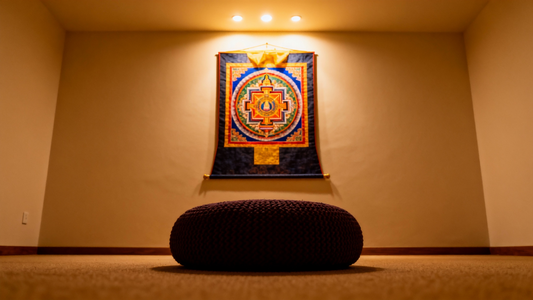

Thangka Mineral Pigments: Why Traditional Artists Insist on Natural Materials? The Secret of Centuries-Lasting Colors
In the world of Thangka art, the vivid and enduring colors are one of its most fascinating charms. Unlike modern synthetic pigments, traditional Thangka artists have always been obsessed with natural mineral pigments—lapis lazuli for the deep blue, malachite for the bright green, cinnabar for the vivid red, and gold powder for the sacred luster. These pigments, extracted from the depths of the earth, not only endow Thangkas with a unique and noble aesthetic but also allow their colors to remain fresh for centuries. This article will deeply explore the reasons why traditional artists adhere to natural mineral pigments and uncover the secret behind their long-lasting durability.
I. Why Do Traditional Thangka Artists Insist on Natural Mineral Pigments?
The preference for natural mineral pigments by traditional Thangka artists is not accidental, but a comprehensive choice based on artistic expression, religious beliefs, and practical needs. It can be summarized into three core reasons:
1. Unmatched Color Quality: The "Divine Luster" Endowed by Nature
Natural mineral pigments have unique color properties that synthetic pigments cannot replicate. Each mineral has an inherent, pure color, which is bright but not gaudy, and has a natural sense of hierarchy and luster.
• Lapis Lazuli: The blue pigment extracted from lapis lazuli is known as "ultramarine blue." It has a deep, serene blue tone, like the vast Himalayan sky. This color is not only visually stunning but also has a unique transparency—when applied in layers, it can show a gradual change from light to dark, creating a sense of depth and sacredness.
• Malachite: The green pigment from malachite is bright and vivid, like the lush grasslands on the Tibetan Plateau. It has a warm green tone that is full of vitality, and when combined with other colors, it can enhance the richness of the picture without being harsh.
• Cinnabar: The red pigment from cinnabar is bright and intense, symbolizing sacredness and piety in Tibetan Buddhism. It has strong coverage and can maintain its vividness even after long-term preservation, making it an ideal choice for depicting the robes of deities and sacred symbols.
• Gold Powder: Gold powder, made from 24K pure gold, has a noble and solemn luster. Unlike synthetic gold paint, natural gold powder has a warm and soft glow that changes with light, endowing the Thangka with a sense of sacredness and luxury. It is often used to depict the halos of deities, mandala patterns, and decorative details, making the work stand out.
These natural colors can blend harmoniously with each other, creating a rich and layered visual effect that makes the deities and scenes in the Thangka more vivid and lifelike. For traditional artists, using natural mineral pigments is the only way to achieve the "divine aesthetic" pursued by Thangka art.
2. Religious Significance: The Integration of Earth and Divinity
In Tibetan Buddhism, Thangka is not only a work of art but also a tool for religious practice and meditation. The use of natural mineral pigments is deeply rooted in religious beliefs, symbolizing the integration of the earth's essence and divine power.
Traditional artists believe that natural minerals are gifts from the gods, and extracting pigments from them is a way to communicate with the divine. Each mineral has its own religious connotation: lapis lazuli symbolizes the wisdom of the Buddha, malachite represents the compassion of the Bodhisattva, cinnabar implies the protection of the Dharma, and gold powder symbolizes the light of the Buddha. By using these pigments, artists infuse the Thangka with profound religious meaning, making it a carrier of faith.
In addition, the process of preparing natural mineral pigments is also a religious ritual. Artists must purify themselves (bathing, fasting, chanting sutras) before extracting and grinding the pigments, ensuring that the entire process is pious and pure. This makes the use of natural mineral pigments not only a technical requirement but also a manifestation of religious devotion.
3. Exceptional Durability: Preserving Faith for Centuries
One of the most remarkable characteristics of natural mineral pigments is their excellent durability. Unlike synthetic pigments, which are prone to fading, discoloration, and cracking, natural mineral pigments can remain bright and intact for hundreds of years, even under natural conditions.
The reason for this durability lies in the chemical stability of minerals. Most natural minerals have a stable crystal structure and are not easily affected by light, temperature, or humidity. For example, lapis lazuli is composed of silicate minerals, which are highly resistant to oxidation; cinnabar is a sulfide mineral with strong chemical stability; gold powder is inert and will not react with other substances. When these pigments are mixed with natural binders (such as animal glue), they can adhere firmly to the canvas, forming a protective layer that prevents fading and wear.
This durability is crucial for Thangkas, as they are often passed down from generation to generation as religious relics and works of art. Many ancient Thangkas from the Tubo Dynasty (7th century AD) that have been preserved to this day still have vivid colors, which is a testament to the exceptional quality of natural mineral pigments.
Our Mineral Pigments thangka:Mineral Pigment Thangka – ThangkaMarket
II. The Use of Mineral Pigments in Nepal, Tibet, and Rebgong Thangkas: Differences and Characteristics
Although natural mineral pigments are an important part of traditional Thangka craftsmanship, there are significant differences in the selection, preparation, and use of mineral pigments among the three major Thangka schools (Nepal, Tibet, and Rebgong) due to regional resources, cultural traditions, and market demands. These differences also directly affect the quality and value of the Thangkas:
1. Tibet Thangka: Pure Natural Mineral Pigments, the Pinnacle of Orthodoxy
Tibet Thangka is the most rigorous in the use of mineral pigments. Traditional Tibetan artists only use pure natural mineral pigments, without adding any synthetic pigments. The selection of minerals is extremely strict—only high-quality lapis lazuli from Afghanistan, malachite from Yunnan, China, cinnabar from Sichuan, China, and 24K pure gold are used.
The preparation process is also extremely complex: the minerals are first selected and crushed into small pieces, then ground into fine powder with a stone mill (the grinding process can take several days to several weeks), and finally purified with clean water to remove impurities. The prepared pigments are mixed with animal glue (made from cow or sheep skin) to adjust the consistency, ensuring that they can adhere firmly to the canvas.
The use of pure natural mineral pigments makes Tibet Thangka's colors rich, thick, and stable, with a solemn and sacred luster. It is precisely because of the use of these high-quality pigments that Tibet Thangka can be preserved for hundreds of years without fading, becoming the first choice for devout religious practitioners and senior collectors.
- Our Tibetan Thangka:Tibet Thangka – ThangkaMarket
2. Rebgong Thangka: Gem-Grade Mineral Pigments, Integration of Beauty and Durability
Rebgong Thangka inherits the rigorousness of Tibet Thangka in the use of mineral pigments and also innovates. It uses gem-grade natural mineral pigments, which are of higher purity and better color quality than ordinary mineral pigments. For example, the lapis lazuli used is of gem grade, with a deep blue color and few impurities; the malachite is of high transparency, with a bright green luster.
In addition to pure mineral pigments, Rebgong artists also add local plant extracts (such as juice from Tibetan snow lotus and rhodiola) to the pigments. These plant extracts not only adjust the color tone but also improve the adhesion and durability of the pigments, making the colors more vivid and long-lasting.
Rebgong Thangka also pays attention to the matching of colors. Artists skillfully combine different mineral pigments to create rich color transitions and layers. For example, the blue of lapis lazuli and the green of malachite are mixed to create a unique cyan color, which is used to depict the sky and water, adding a sense of vitality to the work.
- Our Rebgong Thangka: Rebgong Thangka (Amdo) – ThangkaMarket
3. Nepal Thangka: Synthetic Pigments Dominated, Sparse Use of Mineral Pigments
Compared with Tibet and Rebgong Thangkas, Nepal Thangka has a much simpler use of mineral pigments. Due to the needs of mass production and cost control, most Nepal Thangka artists use synthetic pigments (such as acrylic and gouache) as the main pigments, and only add a small amount of low-grade natural mineral pigments to adjust the color.
The mineral pigments used are often of low quality—for example, low-grade lapis lazuli powder with more impurities, and cheap copper powder mixed with gold paint instead of pure gold powder. The preparation process is also simple, without strict purification and grinding, resulting in poor color quality and durability.
The use of synthetic pigments makes Nepal Thangka's colors bright but not durable, and they are prone to fading and discoloration after being exposed to light for a long time. This also determines that Nepal Thangka is more suitable for decorative use and has little collection value.
- Our Nepal thangka:Nepal Thangka – ThangkaMarket
III. How to Identify Natural Mineral Pigments in Thangkas? Practical Tips for Collectors
For Thangka collectors and buyers, being able to identify whether a Thangka uses natural mineral pigments is crucial for judging its quality and value. Here are several practical identification tips:
1. Observe the Color and Luster
Natural mineral pigments have a unique, soft luster, and the colors are bright but not harsh. For example, the blue of lapis lazuli has a deep, transparent sense, with subtle color variations; the green of malachite has a warm, natural glow. Synthetic pigments, on the other hand, have a dull luster, and the colors are often too bright or too dark, with a single tone and no layering.
2. Check the Back of the Canvas
Natural mineral pigments have good adsorption and penetration. When applied to the canvas, the color will slightly penetrate to the back of the canvas, and the penetration is uneven (showing a natural gradient). Synthetic pigments have poor penetration, and the back of the canvas is often colorless or has a uniform, unnatural color.
3. Touch the Surface of the Pigment
The surface of natural mineral pigments is slightly rough, with a granular texture (the particles are extremely fine and can only be felt by careful touch). Synthetic pigments have a smooth surface, like plastic, with no granular texture.
4. Test with Water (For Unframed Thangkas)
Natural mineral pigments are insoluble in water. If you dip a cotton swab in a small amount of water and gently wipe the surface of the Thangka, the color will not fade. Synthetic pigments are soluble in water, and the color will fade easily when wiped with water (note: this method is only suitable for unframed Thangkas and should be used with caution to avoid damaging the work).
IV. How to Maintain Thangkas with Natural Mineral Pigments?
Although natural mineral pigments are durable, proper maintenance is still necessary to ensure that the colors remain fresh for a long time. Here are some maintenance tips:
• Avoid direct sunlight: Long-term direct sunlight will accelerate the oxidation of pigments, leading to fading. Thangkas should be hung in a cool, ventilated place away from windows.
• Keep away from humidity: Humidity will cause the canvas to deform and the pigments to peel off. The storage environment should be dry, with a relative humidity of 50%-60%.
• Avoid touching with hands: The oil and sweat on human hands will corrode the pigments and the canvas. Do not touch the surface of the Thangka directly; use gloves when handling it.
• Clean regularly: Use a soft brush (such as a makeup brush) to gently sweep away the dust on the surface of the Thangka. Do not use water or chemical cleaners.
Conclusion: The Timeless Value of Natural Mineral Pigments in Thangka Art
Natural mineral pigments are the soul of traditional Thangka art. They are not only a tool for artists to express their creativity but also a carrier of religious beliefs and cultural heritage. The use of lapis lazuli, malachite, cinnabar, and gold powder endows Thangkas with unmatched color quality, profound religious meaning, and exceptional durability, making them works of art that can span centuries.
For collectors, understanding the importance of natural mineral pigments and mastering the identification methods can help them better distinguish the quality and value of Thangkas. For art lovers, appreciating the colors of Thangkas made with natural mineral pigments is a dialogue with nature and tradition, feeling the unique charm of Himalayan sacred art.
If you have more questions about Thangka mineral pigments, such as how to identify the quality of mineral pigments or how to maintain Thangkas, please feel free to leave a comment below or contact our professional Thangka expert team.
Previous
Nepalese vs Tibetan vs Rebgong Thangka: Core Craftsmanship Differences and Art Techniques Explained
Next
Thangka Canvas Preparation: The Handcrafted Foundation for Exquisite Linework
Related articles


Long-term Preservation
Dec 14 2025