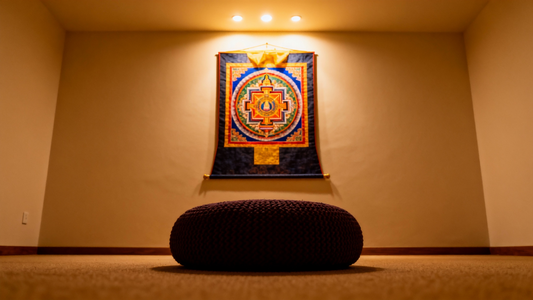

What is Mandala?The Ultimate Guide to Mandala Sacred Geometry, Himalayan Wisdom, and the Inner Path to Awakening
The Mandala is one of humanity’s most enduring spiritual symbols—a timeless pattern that appears in Buddhist temples, meditation halls, Himalayan thangkas, yoga spaces, and even psychological healing methods.
It represents the universe, the mind, and the path to awakening, woven together through sacred geometry.
In the Himalayas, especially within Tibetan Buddhism, the Mandala is not just art; it is a sacred map.
It describes how reality is structured, how consciousness transforms, and how practitioners journey from confusion to clarity.
Today, Mandalas resonate deeply with people around the world—meditators, yogis, art collectors, and seekers on the spiritual path—because they offer a visual way to reconnect with balance, wholeness, and inner harmony.
If you wish to explore authentic Himalayan Mandala paintings, you can browse our curated collection here:
👉 Mandala – ThangkaMarket
1. What Is a Mandala?
A Circle, A Universe, A Path to the Center**
The Sanskrit word Mandala means “circle,” “center,” or “sacred enclosure.”
Circles appear everywhere in nature—sun, moon, ripples in water, cells, galaxies.
Likewise, the Mandala reflects:
-
the cyclical nature of life
-
the wholeness of human consciousness
-
the center point from which all creation unfolds
In Himalayan Buddhism, the Mandala symbolizes:
-
the enlightened mind (the center)
-
the universe in perfect harmony (the structured geometry)
-
the path toward awakening (moving from outer to inner layers)
A Mandala is both a cosmic diagram and a meditative path.
When meditators visualize entering a Mandala, they move through layers of symbolic meaning—purifying fear, transforming emotions, awakening compassion—until they arrive at the center, the awakened state.
If you want to deepen your understanding of these layers, visit our Mandala Learning Guide:
👉 Mandala Guide – ThangkaMarket
2. The Historical Roots of the Mandala
From Ancient India to the Sacred Art of the Himalayas
While Mandalas became most famous through Tibetan Buddhism, their origins stretch back thousands of years.
2.1 Mandala in Early Indian Traditions
In ancient India, Mandala-like patterns appeared in:
-
temple floor designs
-
Vedic fire altar geometry
-
yantras used in meditation
-
ritual diagrams representing cosmic order
These symbols expressed the idea that outer space and inner consciousness mirror one another.
2.2 The Rise of Mandalas in Buddhist Tantra
Around the 6th–7th century, tantric Buddhism developed visual systems for representing enlightened reality.
The Mandala became the core framework:
-
a palace of awakening
-
a divine assembly of enlightened beings
-
a diagram for advanced meditation
-
a cosmic protection field
-
a pathway to transformation
2.3 Transmission to Tibet and the Himalayas
When Buddhism entered Tibet (7th–11th century), Mandala teachings flourished and matured into the most sophisticated form ever developed.
In Tibetan Buddhism, Mandalas are:
-
central to initiation rituals
-
the basis of many meditation practices
-
carefully preserved through thangka painting
-
created in sand, sculpture, architecture, and textile
The Himalayas turned the Mandala into a refined artistic, spiritual, and philosophical system.
3. The Four Classical Mandalas in Tibetan Buddhism
The Body, Speech, Mind, and Activity of Enlightenment
Tibetan Buddhism classifies Mandalas into four profound types:
3.1 The Great Mandala (Deity Mandala)
This is the most visually recognized form:
-
central deity seated in a palace
-
surrounded by circles of lotus petals
-
gates facing the four directions
-
subtle energies encoded in geometry
This Mandala expresses the enlightened form of the deity.
3.2 The Samaya Mandala (Symbol Mandala)
Instead of the deity’s form, the Mandala displays:
-
vajras
-
bells
-
mudras
-
ritual implements
These symbols represent the qualities and commitments (samaya vows) of awakened mind.
3.3 The Dharma Mandala
Here, the Mandala expresses:
-
sacred syllables
-
mantras
-
scriptures
-
symbolic sound forms
This Mandala embodies speech and wisdom.
3.4 The Karma Mandala
Used in:
-
empowerment rituals
-
ceremonial offerings
-
ritual dances and gestures
This Mandala symbolizes enlightened activity—how awakened compassion manifests in the world.
Together, the four Mandalas represent body, speech, mind, and action.
4. The Structure of a Mandala
A Palace of Sacred Geometry and Enlightened Reality
The Mandala’s architecture reflects the structure of a divine universe.
Every line, shape, and proportion follows precise spiritual principles.
Below is a breakdown of key elements:
4.1 The Center (Bindu): The Heart of Awakening
Every Mandala begins with a point:
The seed of all manifestation, the essence of pure awareness.
The central deity sits here, symbolizing:
-
clarity
-
compassion
-
wisdom
-
the unshakable center of the mind
4.2 The Inner Palace: A Sacred Architecture
The main palace is typically square, representing stability and grounded consciousness.
It includes:
-
four gates aligned with the cardinal directions
-
intricate patterns symbolizing cosmic order
-
lotus thrones
-
pillars representing moral foundations
In tantric meditation, the practitioner imagines entering this sacred palace.
4.3 The Four Gates: Thresholds of Transformation
Each gate corresponds to:
-
a Buddha family
-
a direction
-
an element
-
a wisdom type
East — Mirror-like Wisdom
South — Wisdom of Equality
West — Discriminating Wisdom
North — All-Accomplishing Wisdom
Passing through a gate symbolizes overcoming emotional confusion and gaining insight.
4.4 The Lotus Rings: Purity and Spiritual Blossoming
The lotus represents purity arising from the world’s imperfections.
Its petals signify spiritual unfolding.
4.5 The Vajra Wall: Indestructible Clarity
A diamond-like outer wall expresses protection and unshakable wisdom.
4.6 The Fire Circle: Burning Away Illusion
The outer flame ring symbolizes the energy that burns away:
-
ignorance
-
fear
-
negativity
It is the Mandala’s transformative boundary.
5. Five Buddha Families and Their Mandalas
A profound psychological map of emotions and wisdom
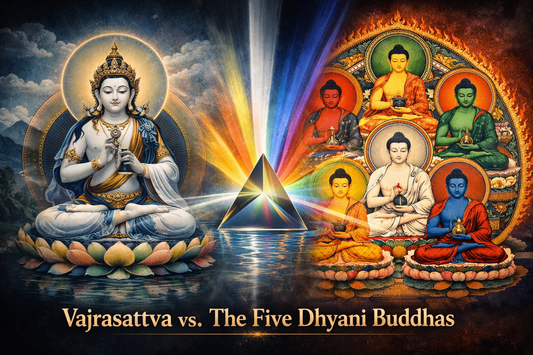
One of the deepest aspects of Mandalas is the Five Tathagata system:
| Direction | Buddha | Element | Transforms | Represents |
|---|---|---|---|---|
| East | Akshobhya | Water | Anger → clarity | Mirror-like Wisdom |
| South | Ratnasambhava | Earth | Pride → equanimity | Wisdom of Equality |
| West | Amitabha | Fire | Desire → discernment | Discriminating Wisdom |
| North | Amoghasiddhi | Air | Jealousy → action | All-Accomplishing Wisdom |
| Center | Vairochana | Space | Ignorance → presence | Wisdom of Dharmadhatu |
This system forms the psychological and cosmological basis for many Mandalas.
6. Mandala Colors and Their Symbolism
A language of light and energy
Each color carries deep meaning:
-
White — purity, openness, space
-
Blue — vastness, clarity, stillness
-
Red — passion transformed into compassion
-
Yellow — richness, earth, generosity
-
Green — action, growth, movement
Together, they describe the transformation of the five root emotions into wisdom.
7. Mandalas in Meditation and Ritual
Walking into the palace of awareness
Tibetan practitioners use Mandalas in meditation by:
7.1 Visualization Practice
Entering the Mandala gate by gate
→ moving toward the center
→ dissolving into the deity’s wisdom.
7.2 Empowerment Rituals
During empowerment ceremonies, Mandalas become actual spaces the practitioner “enters.”
7.3 Sand Mandalas
Created over days or weeks, then swept away.
A profound teaching on impermanence and compassion.
8. Mandala in Jungian Psychology
A symbol of self-integration
Carl Jung discovered that patients spontaneously drew circular symbols during healing.
He realized Mandalas represent:
-
the unity of the self
-
psychological integration
-
emotional balance
-
spiritual growth
This is why Mandalas feel calming and grounding even to people unfamiliar with Buddhism.
9. Mandala in Himalayan Thangka Art
A masterpiece of devotion, craftsmanship, and sacred geometry
In Nepal, Tibet, and Rebgong, Mandala thangkas are created using:
-
strict proportions
-
mineral pigments (gold, lapis, malachite)
-
sacred geometry grids
-
ritual meditation before painting
They are aesthetic and spiritual treasures.
Explore authentic Mandala thangkas here:
👉 Mandala – ThangkaMarket
10. Mandala in Modern Life
From sacred temples to yoga rooms and meditation spaces
Today, Mandalas are used for:
-
meditation
-
intention setting
-
emotional healing
-
yoga environments
-
interior design
-
mindfulness practices
Even when separated from Buddhist ritual contexts, the Mandala still brings peace and balance.
To continue exploring Himalayan wisdom, visit our Learning Center:
👉 Learning Center – ThangkaMarket
11. Conclusion
The Mandala invites you to return to the center
The Mandala teaches a universal truth:
Everything begins from the center, and everything ultimately returns to the center.
When we contemplate a Mandala, we are reminded of:
-
our true nature
-
our inner clarity
-
our capacity for transformation
-
the harmony within all things
It is an ancient symbol, yet eternally relevant.
A map of the universe—and a mirror of the awakened mind.
12. FAQ About Mandalas
(12–15 questions for strong SEO)
1. What does a Mandala represent?
A Mandala represents the universe, the awakened mind, and the journey from confusion to clarity.
2. What is a Tibetan Buddhist Mandala?
It is a sacred diagram depicting a divine palace and the enlightened beings who inhabit it.
3. How are Mandalas used in meditation?
Practitioners visualize entering the Mandala, moving toward the center, and merging with awakened wisdom.
4. What do Mandala colors mean?
Each color symbolizes a spiritual transformation:
white = purity, blue = clarity, red = compassion, yellow = abundance, green = action.
5. What is the purpose of a sand Mandala?
Sand Mandalas symbolize impermanence and compassion. After completion, they are swept away and offered to water.
6. What is the Kalachakra Mandala?
One of the most complex Mandalas in Tibetan Buddhism, representing time, cosmology, and the path to enlightenment.
7. How is a Mandala structured?
It contains a center, palace, gates, lotus rings, vajra walls, and protective fire circles.
8. What is the meaning of the Mandala center?
The center represents pure awareness and the awakened state.
9. Are Mandalas used for healing?
Yes. In both Buddhism and Jungian psychology, Mandalas promote emotional balance and inner integration.
10. Can Mandalas be used in modern interior design?
Yes. Their symmetry and symbolism bring harmony to meditation spaces, yoga rooms, and homes.
11. What are the Five Buddha Families?
A system describing five enlightened qualities, each associated with a direction, color, and wisdom.
12. Are Mandalas always religious?
No. They originate in spiritual traditions but today are used in art, therapy, and personal reflection.
13. Why do Tibetan artists use mineral pigments?
To honor tradition and create Mandalas with lasting vibrancy and spiritual energy.
14. How long does it take to create a Mandala thangka?
Weeks to months, depending on detail, deity complexity, and painting techniques.
15. Where can I learn more about Mandalas?
Visit our Mandala Learning Center for guides and educational resources:
👉 Learning Center – ThangkaMarket
Previous
Mahakala (The Great Black Protector): The Supreme Guardian of Tibetan Buddhism
Next
21 Taras | The Ultimate Guide to the 21 Taras Meaning, Benefits, Mantras & Sacred Feminine Wisdom in Himalayan Buddhism
Related articles
Long-term Preservation
Dec 14 2025