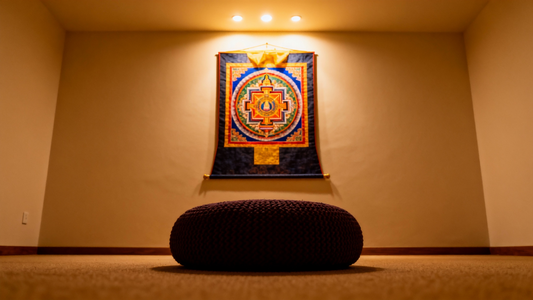

Rebgong Style Thangka: Precise Lines, Bright Hues & Elegant Clarity from Amdo
Rebgong Style Thangka: Precise Lines, Bright Hues & Elegant Clarity from Amdo
In the diverse galaxy of Tibetan Thangka art, the Rebgong (Regong) style shines as a distinguished treasure from the Amdo region. Originating in Rebgong—a celebrated Tibetan art center in Qinghai’s Amdo area—this style is renowned for its precise linework, vivid bright colors, expressive figure proportions, and a unique elegant clarity that sets it apart from other Himalayan art traditions. Blending the sacred orthodoxy of Tibetan Buddhism with the exquisite aesthetics of Han Chinese art and local Amdo cultural elements, Rebgong Thangka has become a symbol of Amdo’s artistic heritage and a favorite among collectors who appreciate the balance of technical rigor and visual vibrancy. This article delves into the origin, core characteristics, craftsmanship, and collection value of the Rebgong style, unlocking the allure of this iconic Tibetan art form.
I. What Is Rebgong Style? The Origin of Amdo’s Celebrated Thangka Tradition
The Rebgong style takes its name from the Rebgong region (present-day Tongren County, Qinghai Province, China), a cultural hub in the Amdo Tibetan area with a centuries-old artistic tradition. Emerging in the 15th century, this style evolved under the influence of three key forces: the orthodox Tibetan Buddhist iconography from central Tibet, the delicate painting techniques of Han Chinese art (especially from the Ming and Qing dynasties), and the unique folk art aesthetics of the Amdo region. Its development was closely tied to local monasteries (such as Longwu Monastery) and folk art workshops, where artists refined their skills through generations of master-apprentice inheritance.
Rebgong Thangka is not just a painting style but a core part of Rebgong Art—a comprehensive art system that includes Thangka painting, sculpture, embroidery, and mask-making. In 2009, Rebgong Art was inscribed on the UNESCO Representative List of the Intangible Cultural Heritage of Humanity, cementing its status as a globally recognized artistic treasure. Unlike some regional styles that focus on either orthodoxy or decoration, Rebgong style strikes a perfect balance between sacred religious connotation and exquisite artistic expression, making it beloved by both devout practitioners and art collectors.
Thangkamarket:Rebgong Style – ThangkaMarket
II. Core Characteristics of Rebgong Style: The Four Hallmarks of Amdo Elegance
The Rebgong style’s unique charm lies in four core characteristics, which are the signature of its craftsmanship and the key reasons for its global acclaim—embodying the "precise linework, bright colors, expressive figure proportions, and elegant clarity" that define the style:
1. Precise Linework: Ultra-Fine, Fluid & Rigorous
Linework is the foundation of Rebgong style, and Rebgong masters are renowned for their unparalleled precision and control. The lines are ultra-fine yet strong, fluid yet rigorous, striking a balance between the bold "iron lines" of the Menri style and the delicate lines of the Karma Gadri style.
• Tool & Technique: Masters use high-quality goat-hair brushes with only 3-5 hairs at the tip, allowing for extreme precision. Lines are drawn with a single, confident stroke—no retouching—whether depicting the delicate eyelashes of a deity, the intricate patterns of jewelry, or the flowing folds of robes. For complex patterns (e.g., floral motifs, cloud scrolls), lines are so fine that they appear as thin as silk threads, earning the reputation of "silk-thread lines."
• Expressive Function: Lines are not just decorative but expressive—varying slightly in thickness and pressure to convey texture and form. For example, thickened lines are used for the outlines of deities to emphasize their sacredness, while thin, light lines are used for fabric folds to show softness and flow. This precision ensures that every detail is clear and vivid, even under close inspection.
2. Bright Colors: Vivid, Layered & Harmonious
Bright, vivid colors are another defining feature of Rebgong style—unlike the muted tones of Karma Gadri or the restrained palette of Menri, Rebgong Thangkas burst with color while maintaining harmony. This use of color reflects the vibrant folk art aesthetics of the Amdo region.
• Pigment Selection & Processing: Rebgong artists use high-purity natural mineral pigments (lapis lazuli for blue, malachite for green, cinnabar for red, realgar for orange) and plant-based pigments, which are ground into ultra-fine powder to ensure vividness and durability. To enhance brightness, artists often add a small amount of 24K gold powder to the pigments, giving the colors a subtle metallic sheen.
Thangkamarket:Mineral Pigment Thangka – ThangkaMarket
• Layering & Blending: Colors are applied in multiple thin layers to create depth and richness—each layer is dried before the next is applied, ensuring that the colors do not mix or bleed. While the overall palette is bright, artists use subtle blending techniques (influenced by Han Chinese painting) to transition between colors, avoiding harsh contrasts and maintaining harmony. For example, the transition from red to orange on a deity’s robe is smooth and natural, enhancing the three-dimensional effect.
3. Expressive Figure Proportions: Lifelike & Sacred
Rebgong style abandons the rigid, symmetrical figure proportions of some monastic styles (e.g., Menri) in favor of more expressive, lifelike proportions that still retain sacred dignity. This makes the deities appear both approachable and divine.
• Balanced Proportions: While adhering to the basic norms of the Tibetan Measurement Sutra, Rebgong artists adjust figure proportions slightly to enhance expressiveness. For example, deities’ faces are slightly more rounded (reflecting Amdo folk aesthetics), with longer eyes that convey compassion and wisdom. Bodhisattvas’ figures are slender yet graceful, with natural postures that avoid the rigidity of other styles.
• Emotional Expression: Figures’ expressions are rich and nuanced—Buddhas have serene, compassionate smiles, Dharma protectors have solemn, powerful gazes, and celestial beings have lively, joyful expressions. This emotional diversity makes Rebgong Thangkas more engaging and narrative-driven, allowing viewers to connect deeply with the spiritual themes.
4. Elegant Clarity: Orderly Composition & Clear Hierarchy
The "elegant clarity" unique to Rebgong style is reflected in its orderly composition and clear visual hierarchy. Unlike the dense ornamentation of Newar style or the spacious landscapes of Karma Gadri, Rebgong compositions are well-structured, with each element arranged to highlight the core theme without clutter.
• Hierarchical Composition: The main deity is placed at the center or upper center of the canvas, slightly larger than other figures to emphasize its importance. Auxiliary figures (disciples, Bodhisattvas) are arranged in an orderly manner around the main deity, with clear spatial relationships. Background elements (mountains, temples, clouds) are simplified yet elegant, providing context without distracting from the main figures.
• Visual Focus: Through the use of bright colors and precise lines, Rebgong artists guide the viewer’s gaze to the main deity and key elements. For example, the main deity’s halo is often rendered with gold and bright pigments, making it the visual focal point. This clarity ensures that the sacred message of the Thangka is easily understood, even by those unfamiliar with Buddhist iconography.
III. Craftsmanship of Rebgong Style: The Secrets of Amdo Masters
Rebgong style craftsmanship is renowned for its rigor, precision, and attention to detail. Rebgong artists undergo 5-10 years of rigorous training under master guidance, mastering every step of the creation process from canvas preparation to final gold application. Key craftsmanship secrets include:
1. Canvas Preparation: Fine Foundation for Precision
Rebgong artists use high-quality linen or cotton canvas, prepared through a meticulous 6-step process: washing (to remove impurities), stretching (with tight, uniform tension), sizing (with a mixture of animal glue and gypsum), sanding (with fine sandpaper to smooth the surface), priming (with a thin layer of white pigment), and final polishing (with agate). This process takes 7-10 days and results in a smooth, firm, white surface that enhances the brightness of pigments and allows for ultra-fine linework. The canvas is so smooth that it feels like silk, providing the perfect foundation for the master’s precision work.
2. Line Drawing: The Core of Rebgong Craftsmanship
Line drawing is the most critical step in Rebgong Thangka creation, often taking up 30-40% of the total creation time. Masters first sketch the composition and figure outlines with light ink, then refine the lines with black or dark brown pigment using ultra-fine brushes. Every line is drawn with a single stroke—masters must hold their breath to ensure stability, and a single mistake can ruin the entire work. For intricate patterns (e.g., jewelry, floral motifs), masters use magnifying glasses to ensure precision, with lines as thin as 0.1mm.
3. Color Application: Layered & Vibrant
Color application in Rebgong style follows a strict "from light to dark" sequence. Artists first apply a thin layer of light pigment, then gradually build up to darker tones, with each layer dried and polished before the next. This layering technique creates rich, vibrant colors that retain their brightness for centuries. For large areas (e.g., deity robes), artists use soft brushes to ensure even application; for small details (e.g., eyes, lips), they use fine-tipped brushes for precise control. To enhance the vividness of colors, some masters add a thin layer of transparent glue after the final color layer, giving the surface a subtle gloss.
4. Gold Application: Elegant Accents & Luminous Effects
Gold is used strategically in Rebgong style to enhance sacredness and visual appeal, striking a balance between the extensive use of Newar style and the restraint of Menri style. Masters use 24K gold leaf or gold powder, applied using both cold and hot gilding techniques:
• Cold Gilding: Used for detailed ornamentation (e.g., jewelry, floral motifs), gold powder is mixed with animal glue to create a thin paste, applied with fine brushes for precise details.
• Hot Gilding: Used for large areas (e.g., halos, lotus thrones), gold leaf is applied to heated glue, creating a luminous, durable finish. Multiple layers of gold leaf are often applied to halos to create a radiant, three-dimensional effect.
The gold accents complement the bright colors, enhancing the elegant and sacred atmosphere of the Thangka without overwhelming the other elements.
IV. Rebgong Style vs. Other Major Thangka Styles: Core Differences
Rebgong style’s unique balance of precision, brightness, and clarity sets it apart from other major styles (Menri, Karma Gadri, Newar). The table below maintains the series’ consistent comparison framework to highlight key distinctions:
|
Feature |
Rebgong Style |
Menri (Miansa) Style |
Karma Gadri Style |
Newar Style |
|
Origin |
15th-century Rebgong, Amdo (Tibetan-Han-Amdo folk fusion) |
14th-century Menri Monastery, Tibet (Sakya sect, monastic orthodoxy) |
15th-century Tibet (Karma Kagyu sect, Tibetan-Chinese fusion) |
13th-century Kathmandu Valley, Nepal (Newar people, Hindu-Buddhist fusion) |
|
Composition |
Orderly, hierarchical, clear focus, balanced background-detail ratio |
Symmetrical, central deity focus, minimalist background |
Asymmetrical, spacious, narrative flow with open landscapes |
Dense, ornate, deity-centric with detailed background decoration |
|
Linework |
Ultra-fine, precise, fluid "silk-thread lines," single-stroke rigor |
Bold, thick, unbroken "iron lines," consistent thickness |
Fluid, delicate, curved lines, subtle thickness variation |
Fine, precise, focused on ornamentation details |
|
Color Palette |
Bright, vivid, layered, harmonious (mineral pigments with gold sheen) |
Bold, solid colors, high contrast, pure mineral pigments |
Soft, muted tones, subtle gradients, plant-mineral blend |
Rich, vibrant, complementary to gold work |
|
Gold Work |
Elegant accents, balanced use (halos + ornamentation), cold/hot gilding |
Restrained, minimal use for key sacred elements |
Subtle, sparse accents with soft glow |
Exquisite, layered, extensive use (core feature) |
|
Core Aesthetic |
Elegant clarity, precise vibrancy, sacred-artistic balance |
Solemn, sacred, orthodox, spiritual purity |
Elegant, naturalistic, atmospheric, human-nature harmony |
Luxurious, ornate, radiant, cultural fusion |
V. Collecting Rebgong Style Thangkas: What to Look For
Authentic Rebgong style Thangkas are highly prized by collectors due to their exquisite craftsmanship and cultural significance. To distinguish genuine works from imitations, focus on the following key factors:
1. Authenticity: Prioritize Rebgong Master Lineage & Certification
Genuine Rebgong Thangkas are created by artists trained in the traditional Rebgong master-apprentice system, often affiliated with local monasteries or renowned art workshops. Look for certificates of authenticity that confirm the artist’s Rebgong lineage and training background. Avoid works with sloppy linework, faded colors, or synthetic pigments—these are mass-produced imitations. Authentic Rebgong works are often marked with the artist’s seal or signature, a sign of the master’s confidence in their craftsmanship.
2. Craftsmanship: Check for Precision & Vibrancy
• Linework: Inspect the lines for ultra-fine precision—they should be fluid, unbroken, and consistent in thickness. Intricate details (e.g., jewelry, eyelashes) should be clear and sharp, with no smudges or retouching.
• Colors: Colors should be bright, vivid, and layered—natural mineral pigments have a distinct luminous quality that synthetic pigments cannot replicate. Check for smooth color transitions and overall harmony, avoiding harsh or uneven tones.
• Gold Work: Gold accents should be even and precise, with no bubbles or gaps. Halos with layered gold should have a radiant, three-dimensional effect.
Thangkamarket:Gold Thangka – ThangkaMarket
• Canvas: The canvas should be smooth, firm, and white—indicating proper preparation. Avoid works with wrinkled, uneven, or discolored canvas.
3. Subject Matter: Focus on Classic Deities & Rebgong-Specific Themes
The most valuable Rebgong Thangkas feature classic Buddhist deities (e.g., Shakyamuni Buddha, Avalokiteshvara, Green Tara) or Rebgong-specific themes (e.g., scenes from Amdo monastic life, local sacred mountains). These works best showcase the style’s unique craftsmanship and cultural roots. For collectors interested in cultural heritage, works depicting Rebgong’s traditional art creation processes are also highly sought after.
4. Mini Rebgong Style Pendants: A Precise & Vibrant Entry Point
For first-time collectors or those seeking daily-wear sacred art, mini Rebgong style pendants (2-5cm) are an excellent choice. These pendants replicate the style’s core features—ultra-fine linework, bright colors, and elegant clarity—using the same natural mineral pigments and 24K gold as full-sized Thangkas. Due to the precision required, mini Rebgong pendants are often crafted by experienced masters, with every detail (from deity expressions to jewelry patterns) rendered with the same rigor as large works. They are perfect for those who appreciate the blend of precision and vibrancy, offering the essence of Rebgong craftsmanship in a portable, wearable form.
VI. How to Care for Rebgong Style Thangkas
Rebgong style Thangkas, with their precise linework and bright pigments, require careful care to preserve their craftsmanship and vibrancy. Follow these key maintenance tips:
• Avoid Direct Sunlight & High Temperature: Bright mineral pigments and gold leaf are prone to fading under direct sunlight. Hang Thangkas in a cool, shaded area away from windows, heaters, or air conditioners—high temperature can dry out the canvas and crack the pigment layers.
• Control Humidity Strictly: Maintain a dry, ventilated environment with relative humidity of 50-55%. High humidity can cause mold growth and glue deterioration, leading to pigment peeling and line blurring. Avoid hanging in bathrooms, kitchens, or damp basements.
• Handle with Extreme Care: The ultra-fine linework and delicate pigment layers are easily damaged by friction. Never touch the surface with bare hands (oil and sweat can tarnish gold and damage pigments). Use cotton gloves when handling, and avoid folding or rolling the Thangka—frame it or store it flat in an acid-free protective case.
• Clean Gently & Infrequently: Dust with an ultra-soft brush (e.g., a fine makeup brush) once every 6-12 months. Do not use water, chemical cleaners, or rough cloths—even gentle wiping can scratch the pigment layers or blur the fine lines.
Conclusion: The Timeless Elegance of Rebgong Style Thangkas
The Rebgong style is a brilliant embodiment of Amdo’s artistic heritage, blending precise linework, bright colors, expressive figures, and elegant clarity into a unique art form that balances sacred spirituality and artistic excellence. As a core part of UNESCO-listed Rebgong Art, it represents the pinnacle of Tibetan folk Buddhist art, reflecting the cultural exchange between Tibet, Han China, and the Amdo region.
For collectors, an authentic Rebgong Thangka is not just a work of art but a valuable investment—one that retains its vibrancy, craftsmanship, and cultural significance for centuries. For art lovers, it is a window into the rich artistic traditions of the Amdo region, inviting us to appreciate the master’s dedication to precision and beauty. Whether in full-sized temple masterpieces or mini pendants for daily wear, the elegant clarity of Rebgong style continues to captivate audiences worldwide.
If you have more questions about Rebgong style Thangkas—whether identifying authenticity, choosing a piece, or caring for your collection—please feel free to leave a comment below or contact our team of Thangka experts.
Previous
Newar Style Thangka: Exquisite Gold Work & Luminous Deities by Nepali Masters
Next
How to Choose a Thangka? A Beginner’s Guide Based on Purpose, Deity, Size, Budget & Style
Related articles
Long-term Preservation
Dec 14 2025